
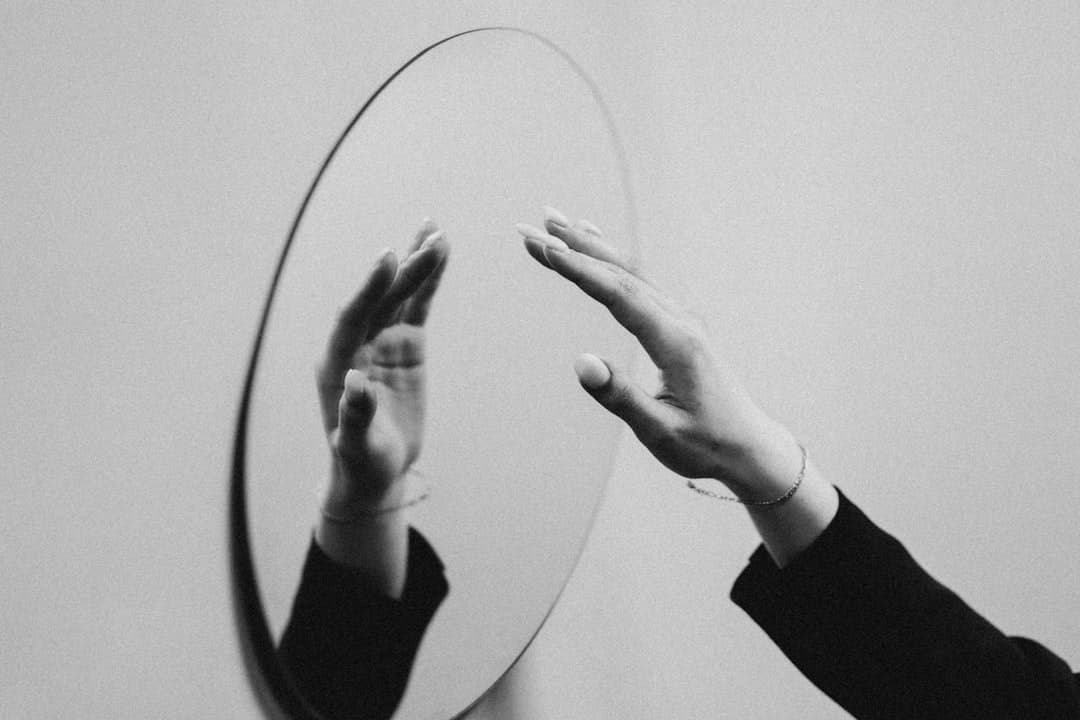
A work-life identity balance checklist is a structured tool that helps you evaluate how your professional role integrates with your personal identity and well-being. For women over 40, this kind of personal balance assessment is not optional. It is the difference between spending your next decade on autopilot and spending it on purpose. The checklist framework covered here draws on a six-week audit process built around four pillars: Time, Energy, Mental and Emotional Well-being, and Relationships. Tools like time logs, energy journals, and boundary-setting practices make the process concrete and repeatable.
1. What is a work-life identity balance checklist?
A work-life identity balance checklist is a personal audit framework that goes beyond counting hours. It asks you to examine who you are when work is removed from the equation. That question feels simple. For many women over 40, it is the hardest one they have ever faced.
The checklist for work-life harmony differs from a standard productivity review because it treats identity as a variable. Your job title, your caregiving role, your professional reputation. These are not your identity. They are roles you play. The checklist helps you separate the role from the self, and that separation is where real change begins.

Think of it as a rhythm check. You are not looking for a perfect score. You are listening for where the rhythm has gone flat.
2. How to run a 6-week work-life balance audit
A thorough audit starts with tracking time and energy for five consecutive days in 15–30-minute increments. That specificity matters. Vague recollections of “a busy week” tell you nothing. A detailed log tells you everything.
The four pillars to examine during your audit are:
-
Time Allocation. Where does your time go versus where you believe it goes?
-
Energy Management. Which activities leave you depleted and which restore you?
-
Mental and Emotional Well-being. Where does stress spike, and what triggers it?
-
Relationships. Which connections nourish you and which drain you without reciprocity?
Run the log honestly. Do not edit your behavior because you are watching it. The goal is a clear picture, not a flattering one.
Alongside your time log, keep an energy journal. After each activity block, rate your energy on a simple scale of 1 to 5. You will quickly see that energy tracking reveals hidden drains that a time log alone cannot show. A two-hour meeting may consume only two hours on the clock but six hours of mental recovery.
Pro Tip: Focus on energy drains first, not time gaps. A calendar full of “reasonable” commitments can still leave you hollow if every item costs more than it gives back.
Do not attempt to fix anything during the tracking phase. Observation and intervention are separate steps. Mixing them corrupts your data and exhausts your resolve.
3. Which 5 dimensions to assess in your personal balance assessment
Effective work-life balance assessments now examine five dimensions through roughly 30 targeted questions. Each dimension surfaces a different layer of imbalance. Together, they give you a map.
| Dimension | What it reveals |
|---|---|
| Working Hours and Flexibility | Whether your schedule reflects your priorities or someone else’s |
| Rest and Recovery | Whether you have genuine downtime or just pauses between obligations |
| Digital Boundaries | Whether screens and notifications govern your attention after hours |
| Workplace Support | Whether your environment respects your limits and contributions |
| Overall Well-being | Whether you feel satisfied with your life as a whole, not just your output |
For each dimension, ask yourself about six reflective questions. For Working Hours, you might ask: Do I regularly work past the time I intended? For Digital Boundaries: Do I check work messages during meals or before bed? For Overall Well-being: If I removed my job title, how would I describe myself?
Women over 40 often score well on productivity dimensions and poorly on rest and digital boundaries. That pattern is not a character flaw. It is a learned behavior, and learned behaviors can be unlearned. The questionnaire approach makes the invisible visible so you can act on what you find.
4. Top strategies for setting boundaries and reducing burnout
Boundary tactics are protective behaviors that separate your work domain from your personal life. They prevent burnout not by creating equal hours in each domain but by creating protected space in each. Balance means prioritized time, not parity.
Here are the core strategies that work:
-
Schedule personal time as a non-negotiable. Block it in your calendar the same way you block a client call. If it is not scheduled, it will be displaced.
-
Identify 1–3 high-impact tasks per day. Focusing on high-impact tasks during your peak focus hours reduces evening work and reactive stress. Everything else is secondary.
-
Create a daily recovery ritual. Journaling, a screen-free walk, or ten minutes of quiet. The specific ritual matters less than its consistency.
-
Use time blocking for personal activities. Treat a yoga class or a phone call with a friend as a meeting. Give it a time slot and protect it.
“Personal time should be scheduled and guarded as seriously as business meetings to protect identity and well-being.” — Zeno Work-Life Balance Guide
The hardest boundary to hold is the one you set with yourself. External deadlines feel urgent. Personal recovery feels optional. It is not. Recovery is the resource that makes everything else possible.
Pro Tip: Saying no is a complete sentence. You do not need to justify declining a request that falls outside your protected time. Practice the phrase: “That doesn’t work for me.” Full stop.
5. How to build a joyful non-work identity
Many women fall into the trap of converting hobbies into side projects, monetizing skills they once enjoyed for their own sake, and turning rest into productivity. This is called “productivizing” leisure, and it blocks true identity restoration. When every activity must justify itself economically, you never leave work mode.
Joy-first activities are the antidote. These are pursuits that serve no economic function and require no output. They exist purely because they light you up. Examples include:
-
Painting or drawing with no intention to sell or share
-
Walking in nature without a podcast or a step goal
-
Cooking a meal slowly, just for the pleasure of the process
-
Reading fiction with no professional development angle
-
Joining a choir, a pottery class, or a community garden
Professional identity often overshadows personal self-discovery. Women who explore creative connection outside work build a non-work identity that sustains them through career transitions, retirement, and the quieter seasons of life. That identity is not built overnight. It is built one joy-first hour at a time.
You can explore this further through Obsessedforlife’s reflection on life outside the caretaking role, which offers a grounded starting point for women ready to reclaim who they are beyond their roles.
6. How to phase your checklist for lasting change
Attempting too many changes at once is the leading cause of unsuccessful balance audits. A phased approach protects you from that failure. It also gives each change time to become a habit before the next one is introduced.
Here is a six-week phased structure that works:
-
Week 1 and 2: Track and observe. Log time and energy without changing anything. Gather your data. Resist the urge to fix.
-
Week 3: Identify joy-first activities. List three to five activities that restore you and have no productivity requirement. Schedule one per week.
-
Week 4: Set your first boundary. Choose one boundary, a specific work cutoff time, a no-phone dinner, a protected morning hour. Hold it for seven days.
-
Week 5: Restructure one work habit. Based on your audit data, shift one recurring task to your peak energy window. Observe the difference.
-
Week 6: Reflect and refine. Review your logs. What improved? What still feels off? Adjust one thing and carry it forward.
Each phase builds on the last. By week six, you have not overhauled your life. You have changed five specific things, each grounded in evidence from your own experience. That is how sustainable change works.
For a deeper look at how this connects to intentional living after 40, Obsessedforlife offers a guide that pairs well with this phased approach.
Key takeaways
A work-life identity balance checklist works because it combines honest self-observation with phased, values-driven action, making lasting change possible without overwhelm.
| Point | Details |
|---|---|
| Start with energy, not time | Track energy levels alongside time logs to reveal hidden drains that hours alone cannot show. |
| Assess five dimensions | Evaluate Working Hours, Rest, Digital Boundaries, Workplace Support, and Overall Well-being for a full picture. |
| Schedule personal time firmly | Block personal recovery and joy activities in your calendar with the same weight as work commitments. |
| Avoid productivizing leisure | Choose joy-first hobbies with no economic output to rebuild identity beyond your professional role. |
| Phase your changes over six weeks | Introduce one change at a time to build habits that hold rather than changes that collapse. |
What I have learned about identity after 40
By Theresa Stairs
The most common thing I see in women over 40 is not burnout from overwork. It is the shock of realizing that work has been doing the heavy lifting of identity for decades. When the job changes, or the kids leave, or the caregiving role ends, there is a sudden silence where the self used to be. That silence is not emptiness. It is an invitation. But it can feel like a crisis if you are not prepared for it.
Experts suggest redefining work as an economic contract rather than a vocation. That framing changed how I think about this work entirely. Your job pays you. It does not define you. That distinction is not cynical. It is liberating.
The women who navigate this season best are not the ones who make dramatic changes. They are the ones who make small, honest ones. They track their energy for a week. They protect one morning. They pick up a hobby they abandoned at 32. They do not wait until they feel ready. They begin, and readiness follows.
If you are reading this checklist and feeling the weight of how much has been given to roles that were never truly yours, that recognition is the beginning. Later life is genuinely ideal for self-exploration, not despite the years behind you but because of them. You know more about what does not work. That knowledge is a gift.
— Theresa Stairs
Ready to go deeper with Obsessedforlife?
A checklist gives you structure. What comes next is discovery.
Obsessedforlife is a self-discovery platform built for women 40 and beyond who are ready to ask the question that belongs entirely to them: What do I want with my life? Through the Obsession Map, an original guided assessment, you explore what brings you joy in this season, what values drive you, and what this chapter is genuinely for. It is not a productivity tool. It is a compass. If this checklist has opened a door, Obsessedforlife is what is waiting on the other side. You have spent enough time showing up for everyone else. This one is for you.
FAQ
What is a work-life identity balance checklist?
A work-life identity balance checklist is a structured self-assessment that evaluates how your professional role integrates with your personal identity, energy, and well-being. It goes beyond time management to examine who you are outside of work.
How long does a work-life balance audit take?
A thorough audit takes six weeks, starting with five days of time and energy tracking in 15–30 minute increments, then moving through boundary setting and habit formation in phased steps.
Why do women over 40 need an identity-focused balance checklist?
Women over 40 often experience identity shifts as caregiving roles, career roles, or both change simultaneously. A checklist for work-life harmony helps them realign daily habits with personal values rather than inherited obligations.
What are the five dimensions of a work-life balance questionnaire?
The five dimensions are Working Hours and Flexibility, Rest and Recovery, Digital Boundaries, Workplace Support, and Overall Well-being. Each dimension is assessed through targeted reflective questions to surface hidden imbalances.
What is the biggest mistake women make when trying to balance work and identity?
The biggest mistake is attempting too many changes at once. A phased, six-week approach builds sustainable habits far more effectively than a complete overhaul attempted in a single week.