

Later life is the most psychologically fertile ground for self-exploration precisely because it combines accumulated wisdom, reduced social obligation, and a sharpened sense of what matters. You have spent decades learning who you are under pressure. Now you get to learn who you are by choice. This shift, from identity shaped by external demands to identity authored from within, is what makes self-exploration in later years so different from anything you attempted at 25 or 35. Research confirms that authenticity rises with age, and the psychological conditions that support genuine self-discovery only deepen as the years pass.
Why later life is ideal for self-exploration
Late-life self-discovery is the formal term psychologists use to describe the process of reconnecting with values, interests, and identity dimensions that were set aside during earlier life stages dominated by career building, caregiving, and social performance. It is not a crisis. It is not a regression. It is, in many ways, the work you were always meant to do.
What makes this stage distinct from earlier attempts at self-exploration comes down to motivation and freedom. In your twenties and thirties, identity formation was largely reactive. You defined yourself in relation to others: a partner, a job title, a family role. The authentic self rediscovered in later life is not a brand-new identity. It is a version of you that was intentionally shelved earlier for practical survival, waiting with quiet patience.
By your forties, fifties, and beyond, the pressure to perform for an audience begins to lift. You are less concerned with being perceived correctly and more interested in living correctly, by your own definition. This shift creates the psychological spaciousness that self-exploration requires.
-
Reduced performance pressure: The social scripts that governed your earlier decades lose their grip. You no longer need to justify your interests or apologize for your preferences.
-
Accumulated self-knowledge: Decades of lived experience give you a richer map of what energizes you and what drains you.
-
Clearer values: You have seen enough of life to know what genuinely matters to you, separate from what you were told should matter.
-
Permission to be curious: Curiosity, once a luxury, becomes an invitation you can finally accept.
Pro Tip: If you are unsure where to begin, try the question: “What did I love doing before I became responsible for everyone else?” That answer is rarely wrong.
How does psychology explain the benefits of self-exploration in later years?
The psychological case for self-exploration after retirement and beyond is not just philosophical. It is grounded in measurable shifts in how the brain and mind operate as we age. Psychologists describe a concept called future time perspective, the way we mentally frame how much time we have left and what we want to do with it. In your fifties and sixties, this perspective shifts from open-ended striving to emotionally meaningful investment. You stop chasing and start choosing.
This shift is the engine behind the paradox of aging and well-being: many people report feeling more themselves, more content, and more purposeful in their later decades than at any earlier point. The chronic self-monitoring burdens of midlife, which elevate cortisol and accelerate aging, begin to dissolve. Stanford Center on Longevity research links this relinquishment of performance to measurable improvements in both mental and physical health.
Middle age can impose the heaviest performance burden, with authenticity rising significantly after seventy as obligations fall away.
Structured reflection also produces concrete results. Life Review Therapy over 8 weeks can significantly improve older adults’ life satisfaction by resolving past conflicts and boosting self-esteem. This means that intentional self-exploration is not passive. It is a practice with documented psychological outcomes.
Creative engagement adds another layer. Painting and writing in later life activate brain regions similar to meditation, enhancing brain plasticity and reducing anxiety and depression among adults aged 60 to 80. The brain, it turns out, is not finished growing. It is simply waiting for a different kind of invitation.
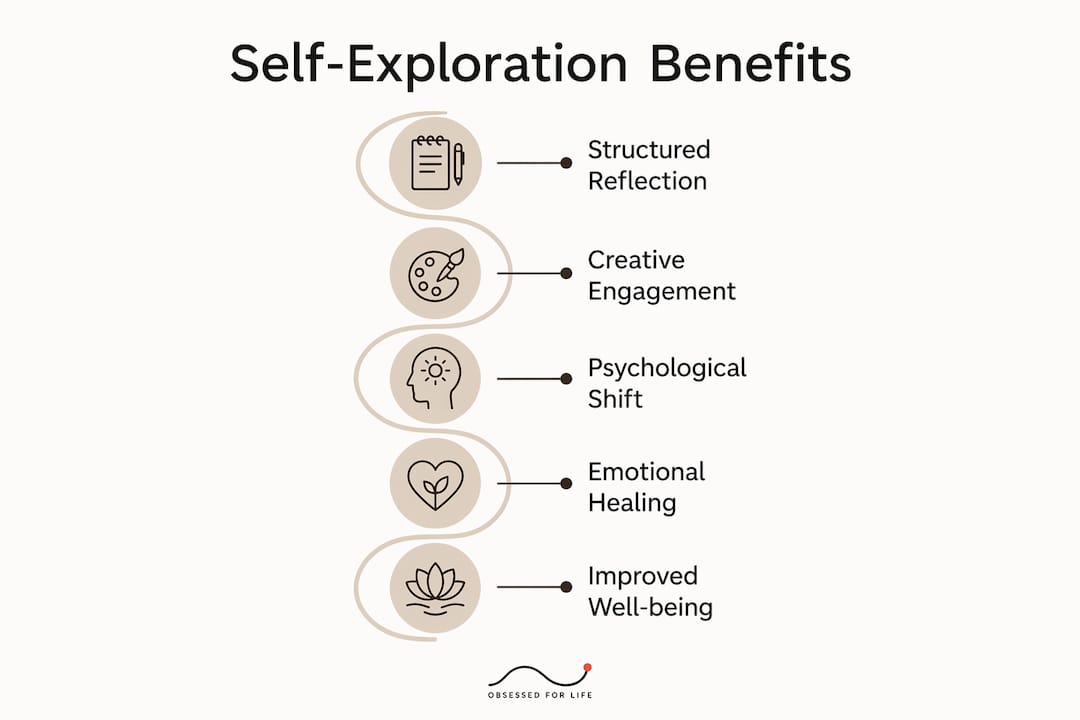
| Psychological shift | What it means for self-exploration |
|---|---|
| Future time perspective narrows | You prioritize depth over breadth, choosing what genuinely matters |
| Performance obligations decrease | Authenticity rises; you act from values rather than expectation |
| Narrative identity becomes coherent | You integrate your full story, not just the highlight reel |
| Brain plasticity through creativity | New activities build new neural pathways and reduce anxiety |
What emotional experiences do women 40+ face during self-exploration?
Reconnecting with yourself after decades of showing up for everyone else is not always a clean, joyful process. It is often tender. Many women experience a quiet guilt when they begin prioritizing their own curiosity and desires, a feeling that wanting things for yourself is somehow selfish or overdue. This guilt is not a warning sign. It is a signal that the process has begun.
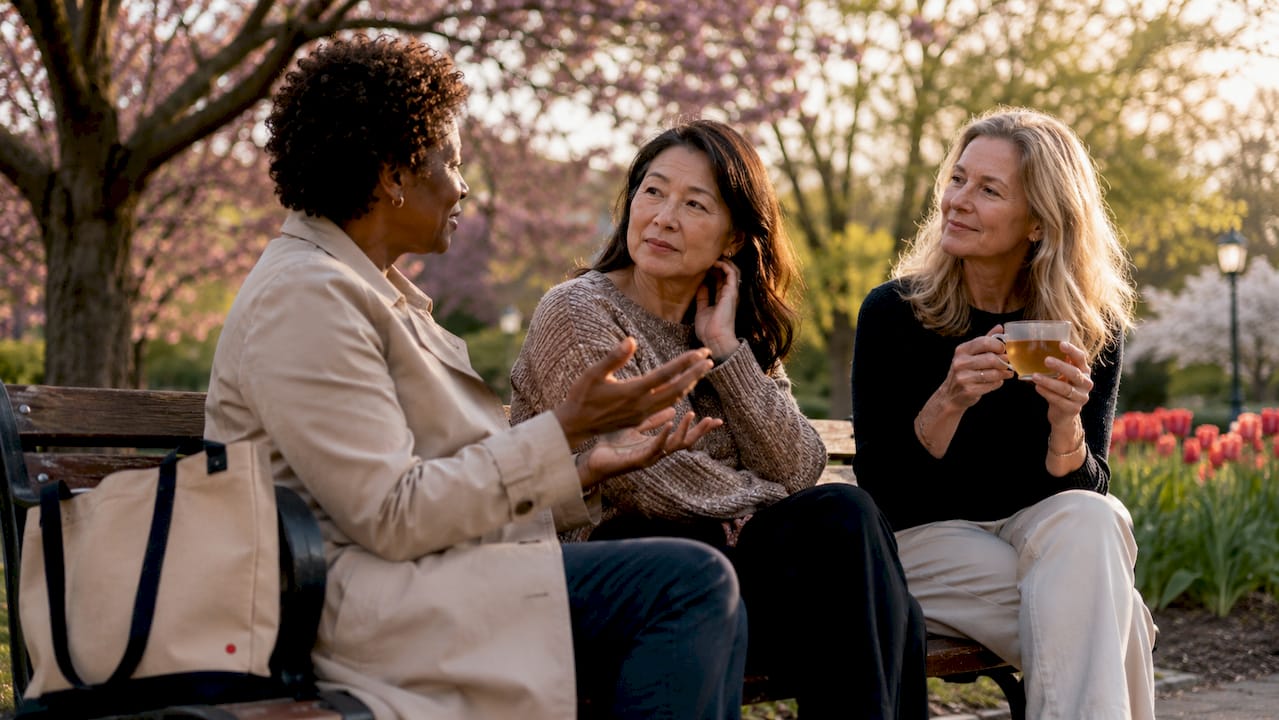
Quiet apology and reconciliation are typical emotional responses when reengaging with the authentic self that was shelved in early adulthood. Psychologists emphasize patience and acceptance here rather than urgency or anger. You are not making up for lost time. You are simply arriving.
Anxiety is another common companion, particularly when free time suddenly expands after retirement or when children leave home. If your curiosity muscle has been dormant for years, unstructured time can feel less like freedom and more like a test you did not study for. Approaching self-exploration as a design project, with small experiments rather than grand reinventions, dissolves that anxiety into something workable.
Here is a practical sequence for navigating the emotional terrain:
-
Name what you feel without judgment. Guilt, restlessness, and grief are all valid responses to change. Writing them down removes their power to stall you.
-
Start with one small act of self-care. Boundary-setting and self-care build practical foundations that dissolve internalized performance scripts over time.
-
Resist the pressure to transform dramatically. Gradual integration is more sustainable than a sudden reinvention. One new habit, one new question, one honest conversation at a time.
-
Find at least one relationship that honors the real you. Isolation amplifies doubt. A single person who sees you clearly makes the process feel less precarious.
Pro Tip: Treat your self-exploration like a life redesign project, not a rescue mission. You are not broken. You are becoming more fully yourself.
What practical steps help women embrace personal growth in later life?
The most effective approach to later life personal development is structured curiosity. That means creating deliberate conditions for self-exploration rather than waiting for inspiration to arrive on its own. Inspiration follows action, not the other way around.
-
Schedule reflection time. Life review, journaling, or even a weekly walk with a specific question in mind all count. The format matters less than the consistency. Structured life narrative reflection produces measurable improvements in self-esteem and life satisfaction.
-
Engage in creative and novel activities. Painting, writing, pottery, music, and dance are not hobbies. They are neurological investments. Creative engagement builds brain plasticity and reduces anxiety in measurable ways.
-
Revisit shelved interests. What did you read obsessively at 19? What subject did you abandon because it was not practical? These are not nostalgic detours. They are clues.
-
Audit your values, not your schedule. The happiest people in midlife author their own stories rather than relying on external validation of their identity. Ask yourself which of your current commitments reflect your values and which reflect someone else’s expectations.
-
Build relationships that reflect who you are now. Seek out people who are also in the process of becoming. Their energy is contagious, and their company is sustaining.
-
Use guided tools. Assessments like the Obsessedforlife Obsession Map are designed specifically to help women identify what brings them joy in this season, rather than defaulting to what was expected of them in the last one.
You do not need a dramatic catalyst to begin. The invitation is already here, in the question you keep returning to: What do I want?
How does self-exploration improve well-being and life satisfaction?
Self-exploration in later life is not a luxury. It is a health practice. Adults over 70 report higher true self-alignment than middle-aged adults, reflecting a decreased need to perform societal roles and greater daily authenticity. That alignment is not accidental. It is the result of years of gradual self-permission.
The benefits extend beyond mood. Women who engage in intentional living after 40 report improved self-esteem, reduced anxiety, and a stronger sense of purpose. Narrative identity also becomes more coherent with age. Older adults integrate difficult life events into a unified life story, which enhances life satisfaction in ways that selective memory or avoidance never can.
The psychological freedom that comes from releasing role performance also deepens relationships. When you stop performing and start being, the people around you respond to something real. Connections become more meaningful, not because you have more time, but because you are more present.
| Before self-exploration | After consistent self-exploration |
|---|---|
| Identity defined by roles and obligations | Identity anchored in personal values and authentic preferences |
| Anxiety about unstructured time | Curiosity about new possibilities and experiences |
| Relationships shaped by duty | Relationships chosen for genuine connection |
| Life story fragmented by regret | Life story integrated and purposeful |
Key takeaways
Later life is ideal for self-exploration because psychological freedom, accumulated wisdom, and a shift toward emotionally meaningful priorities create conditions for authentic growth that simply do not exist earlier.
| Point | Details |
|---|---|
| Authenticity rises with age | Adults over 70 report higher true self alignment than middle-aged adults, making later life the most fertile ground for genuine self-discovery. |
| Reflection produces real results | Life Review Therapy over 8 weeks measurably improves life satisfaction and self-esteem in older adults. |
| Creative engagement builds the brain | Painting, writing, and other creative activities enhance brain plasticity and reduce anxiety in adults aged 60 to 80. |
| Guilt is part of the process | Emotional responses like guilt and restlessness signal the beginning of integration, not a reason to stop. |
| Small steps outperform grand reinventions | Gradual, intentional acts of self-care dissolve internalized performance scripts more effectively than dramatic transformation. |
What I have learned about self-exploration after 40
By Theresa Stairs
The conversation around aging tends to frame it as a series of losses. What I have found, both personally and in the women I encounter through Obsessedforlife, is almost the opposite. The losses are real. But what arrives in their place is something you could not have carried earlier. You were too busy being needed.
What strikes me most is how many women arrive at this stage apologizing for their curiosity, as if wanting to know themselves better is an indulgence they have not earned. They have earned it a thousand times over. The work now is not to become someone new. It is to reclaim who you already are, underneath all the roles you played so well.
I also want to say this plainly: you do not need to have it figured out to begin. The figuring out is the point. Start with one honest question. Sit with it. Let it lead somewhere. The path does not need to be clear before you take the first step. It just needs to be yours.
— Theresa Stairs
Ready to find out what lights you up?
You have spent years being excellent at what others needed. Now the question belongs entirely to you. Obsessedforlife exists for exactly this moment.
Through the Obsession Map, an original guided assessment, you can explore what brings you joy in this season, what values drive you, and what experiences are waiting for you in this chapter. It is not a personality quiz. It is a thoughtfully designed tool that listens to who you are and reflects back a picture of what lights you up. Whether you are 42 or 68, the path forward is yours to design. Start here and let joy be your compass.
FAQ
What is late-life self-discovery?
Late-life self-discovery is the process of reconnecting with values, interests, and identity dimensions that were set aside during earlier decades of caregiving, career building, and social performance. It is not a crisis. It is a return to an authentic self that was always there.
Why is self-exploration easier in later life than in younger years?
Later life reduces performance pressure and social obligation, creating psychological spaciousness that self-exploration requires. Research shows that future time perspective shifts in the fifties and sixties toward emotionally meaningful priorities, making authentic choices feel more natural and urgent.
How does self-exploration benefit mental health after 40?
Creative and reflective self-exploration activates brain regions linked to reduced anxiety and depression, while structured life review improves self-esteem and life satisfaction. Adults who align with their authentic values also report stronger relationships and a clearer sense of purpose.
Is it normal to feel guilty when starting self-exploration?
Guilt is a common and well-documented emotional response when women begin prioritizing their own curiosity after decades of showing up for others. Psychologists describe this as a reconciliation phase that precedes genuine integration and growth, not a signal to stop.
Where do I start if I have no idea what I want?
Begin with the question: “What did I love before I became responsible for everyone else?” Structured tools like the Obsessedforlife Obsession Map are designed to help you identify joy and values in this specific season of life, without requiring you to have the answers before you begin.