
Late-life flourishing is the active process of thriving in your later years by cultivating meaning, purpose, and well-being, rather than simply surviving the effects of aging. This is not a passive state you drift into. It is something you build, tend, and choose. Research shows that nearly 50% of adults 65+ show measurable physical or cognitive improvements, directly challenging the myth that aging means inevitable decline. The concept sits at the intersection of healthspan, purpose, social connection, and wisdom. Experts at Stanford, Harvard, and the American Medical Association all recognize flourishing as a measurable, achievable goal, not a wishful idea reserved for the lucky few.
What does late-life flourishing mean across five key dimensions?
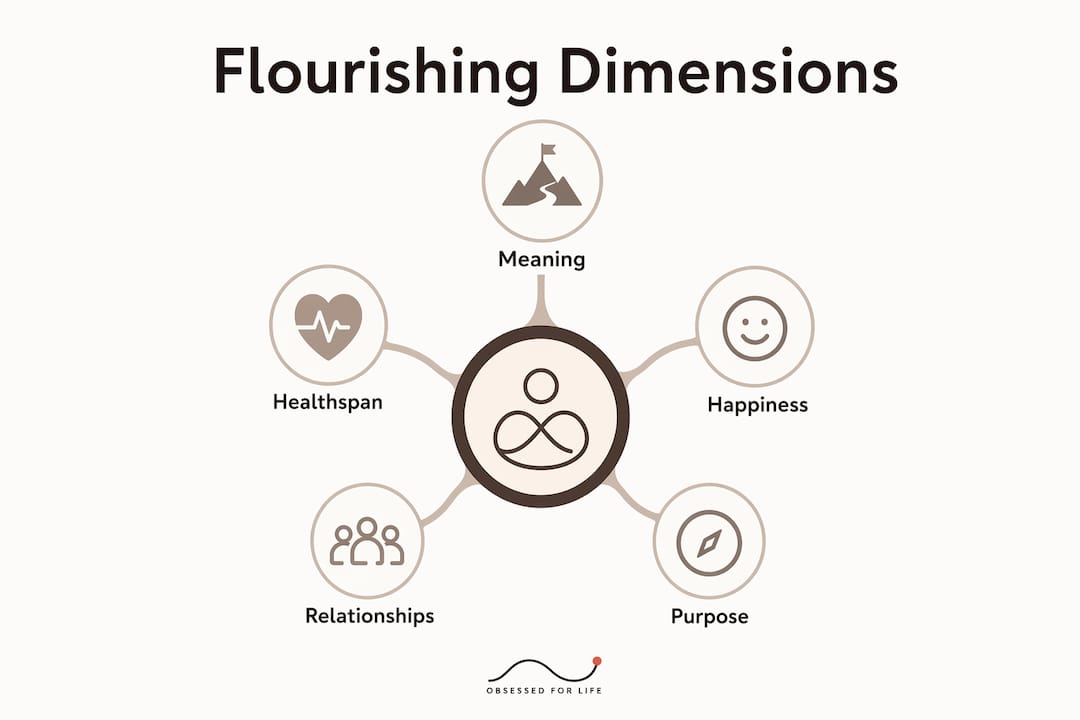
Flourishing in later life is a multidimensional concept. Researchers and clinicians organize it across five core domains: happiness and life satisfaction, physical and mental health, meaning and purpose, character and virtue, and social relationships. No single domain carries the full weight. All five work together, and a gap in one pulls the others down.
Meaning and purpose sit at the center of the framework. A JMIR Mental Health study found that meaning, purpose, and wisdom collectively explain 71% of the variance in mental well-being among middle-aged and older adults. That figure is striking. It tells you that the quality of your inner life matters more than almost any other factor when it comes to how well you age mentally.
Healthspan is the physical counterpart to that inner life. Harvard Health defines healthspan as the period of life free from disabling disease and capable of full engagement. Living to 90 means very little if the final 20 years are spent in limitation. Flourishing shifts the goal from adding years to making years count.
| Flourishing dimension | What it means in practice |
|---|---|
| Happiness and life satisfaction | Feeling genuinely content with your life as it is now |
| Physical and mental health | Maintaining healthspan, not just lifespan |
| Meaning and purpose | Having reasons to get up that feel larger than routine |
| Character and virtue | Acting in alignment with your values consistently |
| Social relationships | Giving and receiving care within real, sustained connections |
The relational dimension deserves special attention. Flourishing is subjective and active, sustained by agency, social support, and meaning even when chronic conditions are present. This means you do not need perfect health to flourish. You need connection, agency, and a sense that your life matters.
How does flourishing shift as you move through your 60s, 70s, and 80s?
Flourishing is not a straight line. It dips, recovers, and often deepens in unexpected ways. An AMA study found that fulfillment dips between ages 65 and 67 during the retirement transition, then rises steadily through the 70s and 80s, driven by self-contentment and a clearer sense of purpose. That temporary dip is real and worth naming. It is not failure. It is transition.
The retirement years ask you to rebuild your identity outside of roles you held for decades. That process takes time. Women who understand this pattern move through the dip with more grace and less self-judgment. They treat it as a season of recalibration, not a sign that something has gone wrong.
Stanford Lifestyle Medicine researchers point to psychological adaptation as the engine behind recovery. You learn to let go of what no longer fits, and you grow more skilled at finding meaning in what remains. That is not resignation. It is a form of wisdom that only comes with lived experience.
Here are four adaptive practices that support flourishing through life’s transitions:
-
Name the transition. Acknowledge that a shift is happening rather than pushing through it without reflection.
-
Revisit your values. What mattered at 45 may not be what matters at 68. Give yourself permission to update the list.
-
Seek a new structure. Flourishing needs rhythm. Replace old routines with new ones that reflect who you are now.
-
Stay curious. Curiosity is a protective factor. It keeps the mind engaged and the spirit open to what comes next.
Pro Tip: If you feel a loss of direction in your early retirement years, treat it as an invitation rather than a problem. The dip is temporary. The rise that follows is real.
What lifestyle and mindset factors actively enhance flourishing?
Flourishing is an active, subjective experience. It responds to how you live and how you think. The Yale research that found nearly 50% of older adults improving cognitively or physically also confirmed that a positive attitude is a measurable, clinically significant driver of those outcomes. Believing you can improve increases the likelihood that you will. That is not motivational language. That is documented science.
Stanford Lifestyle Medicine identifies four practices as non-negotiable for cultivating what researchers call “joyspan”: adapt, give, connect, and live intentionally. Each one is a daily choice, not a one-time event. The women who flourish most visibly in later life are not the ones who had the easiest circumstances. They are the ones who consistently made these choices.
Small, consistent lifestyle investments in sleep, nutrition, and stress management strongly differentiate thriving from surviving. Harvard Health experts are clear on this point. The habits you build now, in your 40s and 50s, shape the healthspan you will have in your 70s and 80s. You are not waiting for later life to begin. You are already designing it.
Practical daily habits that support flourishing:
-
Protect your sleep. Seven to nine hours is not a luxury. It is the foundation of cognitive and emotional resilience.
-
Move your body with intention. Walking, swimming, yoga, and strength training all support both healthspan and mood.
-
Practice mindfulness. Even ten minutes of quiet attention daily reduces stress hormones and sharpens focus.
-
Limit passive consumption. Replace scrolling with creating, connecting, or learning something new.
-
Reflect regularly. A weekly life review practice keeps you aligned with what matters to you.
Pro Tip: Start with one habit, not five. Consistency in one area builds confidence and momentum to expand into others.
How do social connections and contributions support flourishing?
Social connection is not a nice addition to a flourishing life. It is the structure that holds everything else up. Stanford researchers identify social connection as the strongest predictor of longevity and well-being in later life, stronger than diet, exercise, or genetics alone. The quality of your relationships shapes how long and how well you live.
Researchers describe this as “socially buttressed meaning.” The idea is that your sense of purpose and agency does not exist in isolation. Agency and meaning in later life have a vital relational dimension, supported and sustained by the people around you. When you feel seen, valued, and connected, flourishing becomes far more accessible.
Building and deepening relationships in later life takes intention. Old friendships require tending. New ones require reaching out. Both are worth the effort. Women who build vibrant lives after 65 consistently name relationships as the single most important factor in their sense of aliveness.
Contribution matters as much as connection. Giving your time, wisdom, or presence to others creates a feedback loop of happiness and meaning. This is not altruism for its own sake. It is one of the most reliable paths to feeling that your life has weight and direction.
Ways to deepen connection and contribution:
-
Reach out to one person each week with no agenda other than genuine interest.
-
Volunteer in a role that uses your existing skills or knowledge.
-
Share what you have learned with younger women who are earlier in the path you have walked.
-
Join a group organized around something you already love, not something you think you should love.
Pro Tip: Small, consistent acts of generosity create a positive feedback loop. You do not need a grand gesture. A real conversation is enough to start.
What practical steps can women 40+ take now to design a flourishing late life?
The best time to design a flourishing late life is before you are in it. The choices you make in your 40s and 50s, about how you think, what you invest in, and who you stay close to, shape the foundation you will stand on later. Retirement life redesign is a framework that treats later life as a chapter to be authored, not a phase to be endured.
Self-exploration is the starting point. Many women reach their 50s and 60s having spent decades serving others’ needs and schedules. The question “what do I want?” can feel unfamiliar, even uncomfortable. That discomfort is a signal worth following, not avoiding. Later life is ideal for self-exploration precisely because you have the experience, perspective, and, often, the time to go deeper than you ever could before.
Here is a practical plan to begin designing a flourishing later life:
-
Conduct a life review. Look back at what has brought you genuine satisfaction, not just success. The patterns you find there are clues to what will sustain you going forward.
-
Identify your current passions. Not what you used to love or what you think you should love. What lights you up right now?
-
Apply your wisdom. You have accumulated knowledge, perspective, and hard-won insight. Find ways to use it, whether through mentoring, creating, teaching, or leading.
-
Build your support network intentionally. Flourishing is relational. Identify who energizes you and invest in those relationships.
-
Start a new practice this week. Flourishing is built on small, repeated actions. Choose one thing from this article and begin today.
The women who flourish most fully in later life are not the ones who waited for the right moment. They are the ones who started designing their lives before the transition arrived.
Key Takeaways
Late-life flourishing is an active, multidimensional state built through purpose, social connection, healthspan, and consistent daily choices, not something that happens by chance.
| Point | Details |
|---|---|
| Flourishing is multidimensional | It spans five domains: happiness, health, meaning, character, and relationships. |
| Purpose drives mental well-being | Meaning and purpose explain 71% of mental well-being variance in older adults. |
| Healthspan over lifespan | Flourishing means years of full engagement, not just years of survival. |
| Social connection is foundational | Relationships are the strongest predictor of longevity and well-being in later life. |
| Start designing now | Choices made in your 40s and 50s shape the flourishing you experience in your 70s and 80s. |
What I have learned about flourishing that most articles miss
I have spent years reading the research on aging and talking with women who are living it. What strikes me most is how often flourishing is framed as a reward for good behavior. Eat well, sleep enough, stay social, and flourishing will arrive. That framing misses something real.
Flourishing is not a destination. It is a posture. The women I find most alive in their later years are not the ones who checked every wellness box. They are the ones who stayed genuinely curious about their own lives. They kept asking what they wanted, what they valued, and what they still had to offer. That question never got old for them.
The research on mindset and aging confirms what I have observed. Believing you can improve produces improvement. That is not wishful thinking. It is documented in clinical outcomes. Your attitude toward aging is not just a mood. It is a health variable.
What I would tell any woman in her 40s or 50s is this: do not wait until you feel ready to start thinking about what you want your later life to look like. Readiness is a myth. Curiosity is the real starting point. Follow what lights you up now, and you will be building the foundation for a life that flourishes later.
— Theresa Stairs
What Obsessedforlife offers women ready to flourish
Knowing what late-life flourishing means is one thing. Knowing what it looks like for you is another question entirely.
Obsessedforlife was built for the woman who has spent years showing up for everyone else and is now ready to ask what she wants. The Obsession Map, Obsessedforlife’s original guided assessment, helps you identify what brings you joy in this season, what values drive you, and what this chapter of your life is genuinely for. It is not a quiz. It is a mirror. If you are ready to move from understanding flourishing as a concept to living it as a practice, Obsessedforlife is where that work begins.
FAQ
What does late-life flourishing mean in simple terms?
Late-life flourishing means actively thriving in your later years through meaning, purpose, social connection, and well-being, rather than merely surviving the aging process. It is a multidimensional state that includes physical health, mental well-being, and a sense that your life matters.
At what age does flourishing typically improve in later life?
Research shows fulfillment dips temporarily between ages 65 and 67 during the retirement transition, then rises steadily through the 70s and 80s as self-contentment and purpose deepen.
What is the difference between healthspan and lifespan?
Healthspan is the period of life free from disabling disease and capable of full engagement. Harvard Health identifies healthspan as more relevant to flourishing than lifespan alone because the quality of years matters more than their quantity.
Can your mindset affect how well you age physically?
Yes. Yale research found that a positive belief in your ability to improve is a measurable, clinically significant driver of actual cognitive and physical gains in later life.
How important are relationships to late-life flourishing?
Social connection is the strongest predictor of longevity and well-being in later life, according to Stanford researchers. The quality of your relationships shapes both how long and how well you live.