

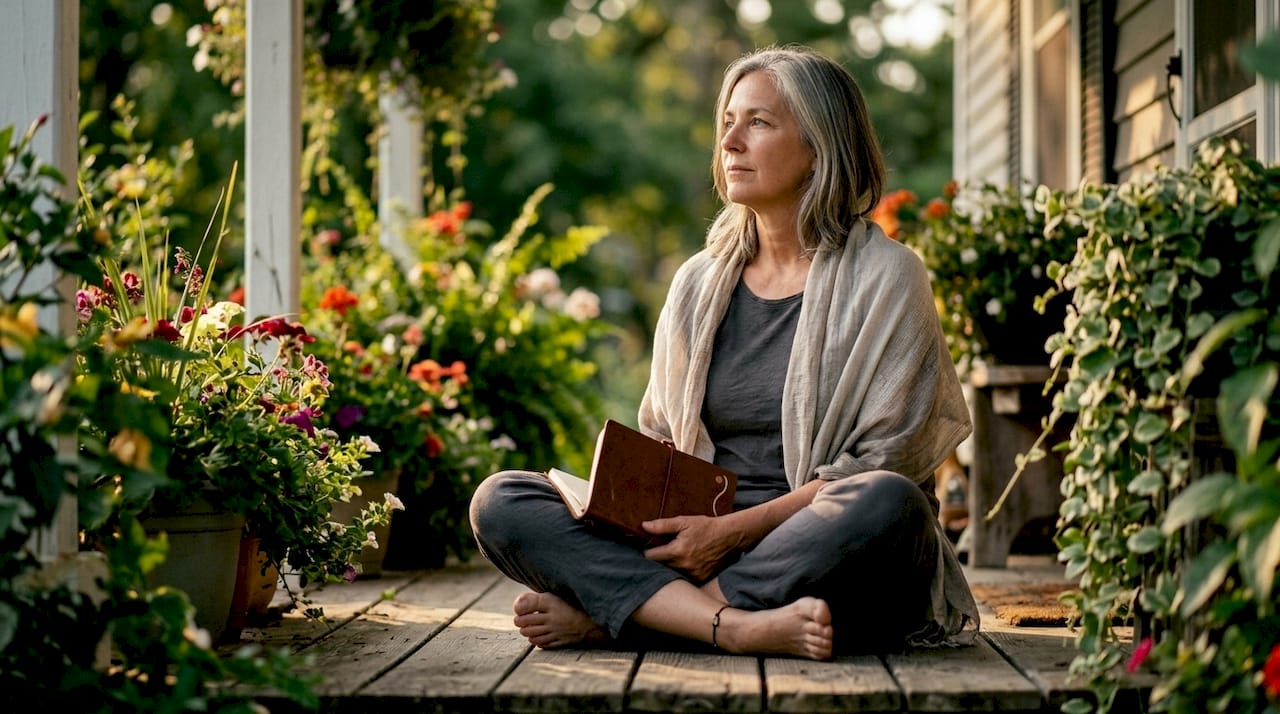
Living fully in later years means cultivating meaning, purpose, joy, and active engagement in ways that align deeply with who you are, not just extending your lifespan. This concept goes far beyond physical health. It reaches into the mental, spiritual, and social dimensions of a life that feels genuinely yours. Recent research confirms that meaning and purpose are the strongest predictors of mental well-being among adults 40 and older. That finding reframes everything. The question is no longer how long you live. It is how fully you inhabit the life you have.
What living fully in later years really means
Living fully is not a vague aspiration. It is a practice built on three foundations: connection, contribution, and wisdom. Psychology Today introduced the concept of soulspan to describe this dimension of optimal living, defining it as the measure of feeling fully alive through joy, satisfaction, and meaning rather than simply years lived. Soulspan is built through creativity, contribution, and connection. That framing matters because it shifts the goal from surviving to thriving.
For women 40 and beyond, this shift often arrives as a quiet but persistent question: What do I want now? After decades of showing up for everyone else, that question is not selfish. It is the most honest invitation your life has ever extended to you. The work of authentic living begins when you stop waiting for permission to answer it.
How meaning and purpose drive mental well-being
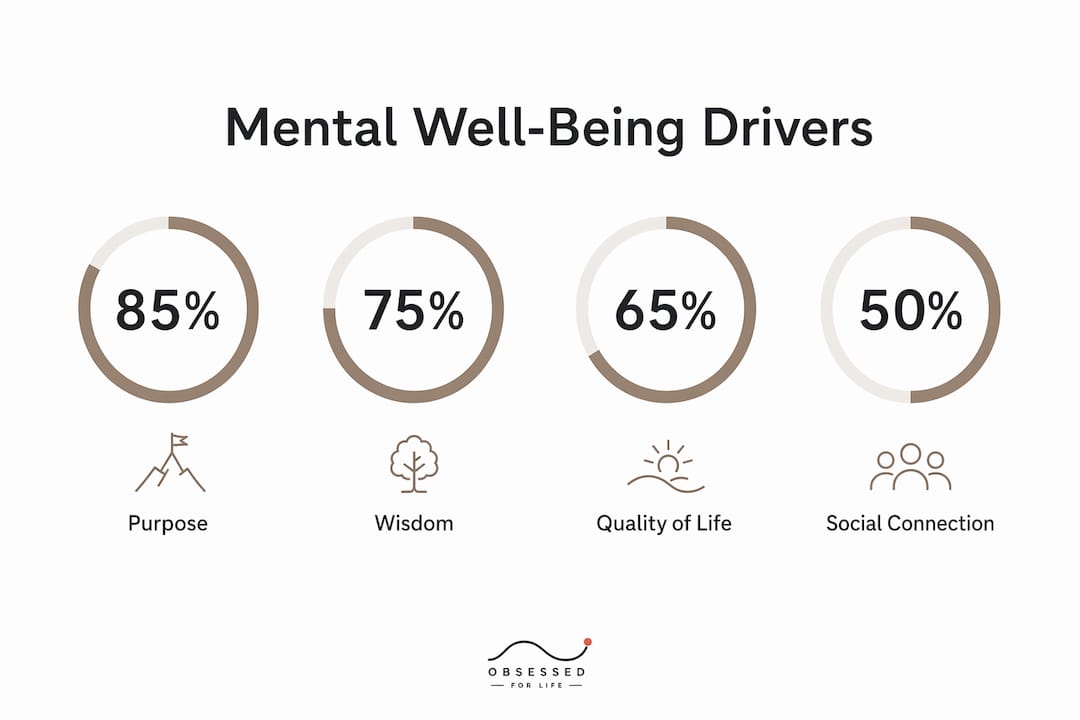
A 2026 cross-sectional study published in JMIR Mental Health found that purpose, wisdom, and quality of life together achieved 82.1% accuracy in predicting mental well-being among middle-aged to older adults. That level of predictive power rivals clinical diagnostic tools. It means your inner life, specifically how much meaning you feel on an ordinary Tuesday, shapes your mental health more reliably than most external circumstances.
Meaning also acts as a buffer against physical hardship. Research shows that higher meaning in life significantly protects mental and physical quality of life in older adults living with chronic pain, with odds ratios of 2.06 for mental quality of life and 1.69 for physical quality of life. Those numbers are not abstract. They suggest that a woman managing arthritis or fatigue who holds a strong sense of purpose experiences her condition differently, and better, than one who does not.
Purpose is also dynamic. It does not stay fixed across decades. What drove you at 38 may feel hollow at 58. That evolution is not failure. It is the natural rhythm of a life being lived honestly. Consider what shifts when you move from raising children to reclaiming your own curiosity, or from a career identity to a contribution identity. The role of life review in this process is well-documented: reflecting on what has mattered helps clarify what still does.
There is a specific kind of clarity that arrives when you stop waiting for your second act to reveal itself and start designing it.” — Jeanette Brown
How does social connection reduce loneliness in later life?
Loneliness is not simply a feeling. It is a measurable health risk, and it responds to deliberate intervention. A 2026 BMC Geriatrics study found that social network use and perceived support significantly reduce loneliness among adults 60 and older, with active aging behaviors playing a central role. Active aging here means social, physical, and productive engagement, not just staying busy.
A separate 2026 randomized trial, the PALS study, found that personalized loneliness interventions outperform generic social contact programs. The key mechanisms were matching activities to personal interests, honoring individual autonomy, and linking people to community resources. This is a meaningful distinction. Joining a group you do not care about does not cure loneliness. Joining one that reflects who you are does.
Here are four evidence-based ways to build genuine social connection in later years:
-
Identify one interest-based community and commit to showing up consistently for 90 days before evaluating whether it fits.
-
Use digital platforms intentionally. Video calls, interest-based forums, and online learning communities extend your social reach beyond geography.
-
Invest in reciprocal relationships. Giving support matters as much as receiving it. Contribution deepens connection.
-
Release relationships that drain rather than restore. Not every long-standing connection serves your current season.
Pro Tip: If you feel isolated but not sure where to start, explore experiences that once lit you up before life got crowded. Reconnecting with old interests often brings you back to people who share them.
What physical habits support an active lifestyle in later years?
The body is not separate from the life you are building. It is the instrument through which you live it. Australia’s 2026 Department of Health guidelines recommend that adults 65 and older engage in daily moderate-intensity activity, muscle strengthening at least twice weekly, and balance exercises at least three times weekly, while minimizing sedentary time. These are not aspirational targets. They are the baseline for maintaining independence and vitality.
Age UK’s 2026 guidance adds an important note: the benefits of regular physical activity generally take about six months to become fully apparent. That timeline matters because most people quit before the payoff arrives. Consistency is the strategy, not intensity.
| Habit | Recommended frequency | Why it matters |
|---|---|---|
| Moderate cardio (walking, swimming) | Daily or most days | Supports heart health and mood regulation |
| Strength training | Twice weekly | Preserves muscle mass and metabolic function |
| Balance and coordination exercises | Three times weekly | Reduces fall risk and supports independence |
| Quality sleep | 7 to 9 hours nightly | Restores cognitive clarity and emotional resilience |
| Mental stimulation (reading, learning) | Daily | Slows cognitive decline and sustains curiosity |
The Merck Manual’s 2026 update on aging confirms that biologic age varies significantly with lifestyle, even among people of identical chronological age. Two women at 62 can inhabit entirely different bodies depending on decades of accumulated habits. That is not a guilt trip. It is an invitation to begin wherever you are.
Pro Tip: Pair a new physical habit with something you already enjoy. Walking while listening to a podcast you love, or doing balance exercises while watching your favorite show, removes the friction of starting and makes consistency feel natural rather than forced.
You can also explore modeling healthy habits at home as a practical starting point for building sustainable routines that support your whole self.
How to design daily rhythms that sustain fulfillment
Fulfillment does not arrive fully formed. It is assembled, piece by piece, through the rhythms you build into ordinary days. Small, repeatable anchors, such as a morning routine that begins with intention rather than obligation, create the structure within which joy can take root. Without that structure, even the best intentions dissolve into the noise of the day.
Life redesign researcher Jeanette Brown offers a practical framework for turning vague aspirations into measurable daily actions: write down your current constraints, your core values, the contributions you want to make, and the relationships you want to nurture or release. Then run short 90-day experiments. This approach treats your life like a design project rather than a waiting room.
Psychology Today’s 2026 synthesis found that positive beliefs about aging help maintain and even improve physical and cognitive function. What you believe about this season shapes how you inhabit it. A woman who sees 55 as the beginning of her most intentional chapter will build a different life than one who sees it as the beginning of decline.
A few anchors worth building into your rhythm:
-
A morning question. Ask yourself each morning: What would make today feel meaningful? Not productive. Meaningful.
-
A weekly contribution. Identify one way each week to give something of yourself, whether through mentoring, creating, or simply being present for someone who needs it.
-
A quarterly review. Every 90 days, assess what is working, what has expired, and what new experiment deserves a try.
-
A daily joy practice. Notice one moment each day that felt genuinely good. Write it down. Over time, this trains your attention toward what lights you up.
Fulfillment can dip sharply around major transitions like retirement, when social roles shift and identity feels unmoored. That dip is normal. Anticipating it and planning for it, rather than being blindsided by it, makes all the difference. Exploring life redesign at midlife before the transition arrives gives you a map before you need one.
Key takeaways
Living fully in later years requires meaning, social connection, physical vitality, and intentional daily design working together, not separately.
| Point | Details |
|---|---|
| Meaning predicts mental well-being | Purpose and wisdom are the strongest predictors of mental health among adults aged 40 and older. |
| Soulspan over lifespan | Feeling fully alive depends on joy, contribution, and connection, not just years or health metrics. |
| Personalized connection reduces loneliness | Matching social engagement to personal interests outperforms generic social contact programs. |
| Physical habits compound over time | Benefits of consistent movement and sleep take roughly six months to fully emerge. |
| Daily rhythms make fulfillment real | Small anchors and 90-day experiments turn vague intentions into lived experience. |
What I’ve learned about living fully that no one tells you
By Theresa Stairs
The research is clear. But the part that changed how I think about this season of life is not in any study. It is the recognition that most women arrive at 40, 50, or 60 having been extraordinarily good at a life that was largely designed around others. The skills are real. The love was real. And yet something essential was deferred.
What I have observed, both in my own life and in the women I encounter through Obsessedforlife, is that the question “What do I want?” is not a midlife crisis. It is a midlife arrival. The crisis, if there is one, is in continuing to ignore it.
The concept of soulspan resonates with me precisely because it refuses to let longevity be the measure of a life well lived. You can live to 95 and have spent most of it performing a version of yourself that never quite fit. Or you can begin at 52 to build something that is genuinely, specifically yours. The second path requires courage. It also requires the willingness to experiment, to release what has expired, and to trust that joy is a legitimate compass.
The women who thrive in this season are not the ones who have everything figured out. They are the ones who stay curious about themselves. They ask better questions. They build small, honest rhythms. And they give themselves permission to begin.
Ready to find your joy and follow it?
If this article stirred something in you, that quiet recognition that this season belongs to you, Obsessedforlife was built for exactly this moment.
Through the Obsession Map, an original guided assessment, you can explore what brings you joy right now, what values are driving you, and what experiences are genuinely waiting for you in this chapter. It is not a quiz. It is a reflection tool designed to listen to who you are and show you what lights you up. Whether you are 42 or 68, the path forward can feel like yours because it is. Start here and let joy lead.
FAQ
What does living fully in later years mean?
Living fully in later years means actively cultivating meaning, purpose, joy, and social connection rather than simply maintaining physical health. Research defines it as building a life rich in contribution, creativity, and authentic engagement across mental, social, and spiritual dimensions.
How does purpose affect mental health after 40?
Purpose is the strongest predictor of mental well-being among adults 40 and older, with a 2026 JMIR Mental Health study achieving over 82% accuracy in forecasting mental health outcomes using purpose and wisdom as variables. Higher meaning also buffers the negative effects of chronic pain on quality of life.
How can I reduce loneliness and build real connection in later life?
Personalized approaches work best. A 2026 randomized trial found that matching social activities to personal interests and linking individuals to community resources reduces loneliness more effectively than generic social programs. Start with one interest-based community and commit to it consistently for 90 days.
What physical activity is recommended for women over 65?
Australia’s 2026 Department of Health guidelines recommend daily moderate-intensity activity, muscle strengthening twice weekly, and balance exercises three times weekly. Age UK notes that the full benefits of consistent physical activity typically emerge after about six months of practice.
Can your mindset about aging change your health outcomes?
Yes. Psychology Today’s 2026 synthesis found that positive beliefs about aging help maintain and improve both physical and cognitive function. What you believe about this chapter of life shapes how you inhabit it, making mindset a genuine health variable, rather than a motivational concept.