

Life satisfaction assessment types are standardized tools designed to help you evaluate your overall contentment with life, offering a structured mirror for personal fulfillment. These are not mood trackers or personality quizzes. They measure your cognitive evaluation of how your life compares to what you hoped it would be. For women in midlife and beyond, that distinction matters deeply. You have lived enough to know the difference between a bad week and a life that needs rethinking. The right assessment helps you tell those two things apart, and then decide what to do next.
1. How do single-item global life satisfaction measures work?
Single-item measures are the simplest life satisfaction assessment types available. They ask one question and produce one number. The two most widely used are the Cantril Ladder and the Overall Life Satisfaction question, both rated on a 0–10 scale. You picture a ladder, place yourself on a rung, and reflect on where your life stands overall.
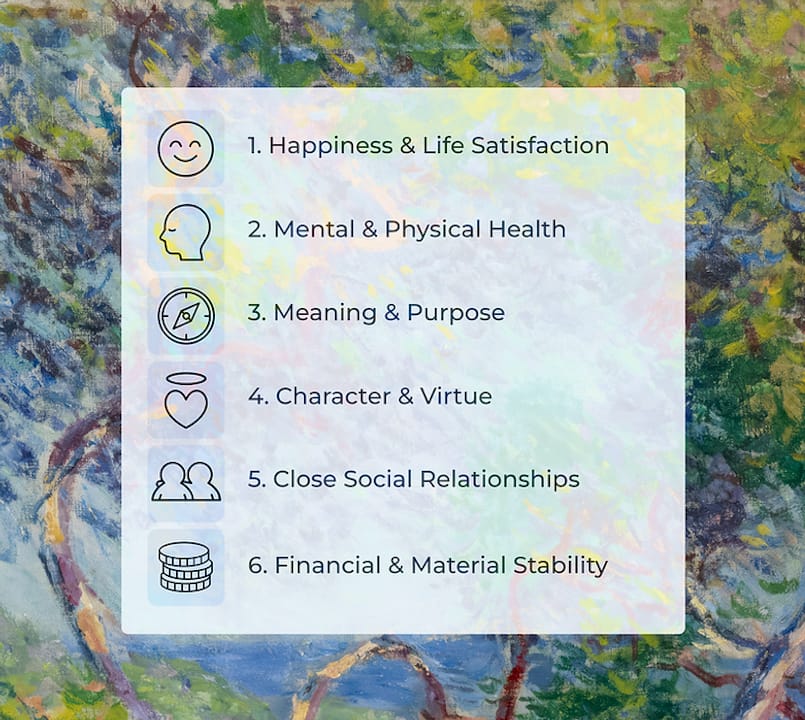
These tools measure your cognitive evaluation of life trajectory, not how you feel right now. That is a critical distinction. A stressful morning does not belong in your answer. Your sense of whether life, taken as a whole, is going in a direction that feels right to you does.
Advantages for midlife reflection:
-
Takes under two minutes to complete
-
Easy to repeat weekly or monthly to track shifts over time
-
Requires no scoring guide or professional interpretation
-
Works well as a starting point before trying longer tools
Limitations to keep in mind:
-
One question cannot capture the texture of a full life
-
Results can be influenced by recent events if you are not careful to step back
-
Offers no guidance on which area of life to address
Pro Tip: Use a single-item measure at the start of each month as a quick emotional check-in. Write your number in a notebook and note one word that explains it. Over three months, patterns will emerge that a single session never could.
2. What makes the Satisfaction With Life Scale a research standard?
The Satisfaction With Life Scale, known as the SWLS, is a 5-item scale rated on a 7-point Likert format, developed in 1985 and now recognized as the gold standard for measuring life satisfaction in research. Each statement invites you to reflect on your life as a whole. One item reads: “In most ways my life is close to my ideal.” You rate your agreement from 1 (strongly disagree) to 7 (strongly agree).
The SWLS captures global cognitive judgment, not emotion. It asks you to step outside your current feelings and evaluate your life from a wider vantage point. That is exactly the kind of reflection that midlife calls for.
What the five items cover:
-
Closeness to your ideal life
-
Satisfaction with your life conditions
-
How much you have gotten what you want from life
-
Whether you would change anything if you could start over
-
Overall contentment with your life
Pro Tip: After completing the SWLS, write one sentence about the item that surprised you most. That item often points directly to the area of life most ready for attention.
Psychometric research shows the SWLS reflects two sub-factors: congruence with your ideals and a sense of achievement. That means your total score tells one story, but the individual items tell another. Reading them separately gives you more to work with than the number alone.
3. How domain-specific and quality of life assessments differ from global tools
Global measures give you a single altitude reading. Domain-specific tools show you the terrain. The WHOQOL-BREF is a validated 26-item quality of life assessment that evaluates four distinct areas: physical health, psychological well-being, social relationships, and environment. It was developed by the World Health Organization and is used across cultures and age groups.
For women 40 and beyond, this kind of structure is genuinely useful. You may feel satisfied with your relationships but quietly restless about your physical health or your sense of purpose. A domain-specific tool surfaces those contrasts in a way a single number never could. You can explore what living fully means across each area of your life, not just in the abstract.
-
Physical health domain: Energy, mobility, pain, sleep, and daily functioning
-
Psychological well-being domain: Self-worth, meaning, concentration, and emotional balance
-
Social relationships domain: Personal connections, support systems, and intimacy
-
Environment domain: Safety, access to resources, home, and financial security
The WHOQOL-BREF balances depth with practicality. At 26 items, it is thorough without being exhausting. Longer clinical tools, such as the 69-item Significant Quality of Life Measure, can cause survey fatigue that undermines honest reflection. For personal self-discovery rather than clinical diagnosis, shorter domain-specific tools consistently produce more meaningful results.
4. How to select the right life satisfaction assessment type for your midlife goals
Choosing the right tool starts with knowing what question you are trying to answer. A quick check-in after a major life change calls for a different tool than a deep audit of where you want to go next. Matching the assessment to your purpose protects your time and keeps the process meaningful.
The table below compares the main life quality assessment methods by length, focus, and best use.
| Assessment type | Length | Primary focus | Best for |
|---|---|---|---|
| Single-item global scale | 1 question | Overall life trajectory | Quick monthly check-ins |
| Satisfaction With Life Scale | 5 items | Cognitive life evaluation | Deeper reflection, tracking change |
| WHOQOL-BREF | 26 items | Four life domains | Identifying specific areas to address |
| Extended clinical scales | 50+ items | Clinical diagnosis | Professional or research settings |
Women seeking midlife self-discovery rarely need a clinical-grade instrument. The SWLS or WHOQOL-BREF will give you more than enough to reflect on. The goal is insight, not a diagnosis.
One practical rule: if you feel resistance halfway through a questionnaire, stop. Survey fatigue produces careless answers, and careless answers produce misleading results. A shorter tool completed honestly outperforms a longer one completed on autopilot. Choosing the right assessment also means choosing one you will finish.
5. What insights can life satisfaction assessments provide for personal growth after 40?
Life satisfaction assessments capture something that daily reflection often misses: the stable, long-term evaluation of your life as a whole. Life satisfaction scores tend to remain relatively stable even through significant life events. That stability is the point. It tells you something real about your baseline, not just your current chapter.
“Life satisfaction is not a measure of how today went. It is a measure of how your life, taken as a whole, compares to what you hoped it would be. That is a much more useful question to sit with.”
This distinction between mood and life evaluation is one that well-being research consistently emphasizes. Single-item assessments and multi-item scales serve different but complementary purposes. Used together, they give you both a wide-angle view and a close-up of specific areas.
For women at 40 and beyond, the most useful application of any assessment is not the score itself. It is the conversation the score starts. Which domain surprised you? Which item felt immediately true? Which one felt like a quiet alarm? Those reactions are the data worth following. You can use a life audit approach to turn assessment results into a structured plan for what comes next.
Assessments also reveal where acceptance may serve you better than change. Not every low score is a problem to fix. Sometimes it is an invitation to grieve something, name it clearly, and decide whether it still belongs in your life.
6. How values-based living connects to life satisfaction measurement
Life satisfaction scores do not exist in a vacuum. They reflect whether your daily life aligns with what you value. Women who live in alignment with their values consistently report higher life satisfaction, not because their circumstances are perfect, but because their choices feel like their own.
This is why assessment results are most useful when paired with a clear sense of what matters to you. A low score in the social relationships domain means something different for a woman who deeply values community than for one who genuinely prefers solitude. Context is everything. The number points; your values interpret.
Using assessment tools alongside intentional living practices creates a feedback loop that is genuinely useful. You assess, you reflect, you act with intention, and then you assess again. Over time, that cycle produces real clarity about what this season of life is for.
Key takeaways
The most effective approach to evaluating life satisfaction combines a simple global measure for regular check-ins with a domain-specific tool for deeper, periodic reflection.
| Point | Details |
|---|---|
| Start simple | Single-item scales like the Cantril Ladder offer fast, honest snapshots of overall life trajectory. |
| Go deeper with the SWLS | The 5-item Satisfaction With Life Scale reveals both congruence with ideals and sense of achievement. |
| Use domains for nuance | The WHOQOL-BREF separates physical, psychological, social, and environmental well-being for targeted insight. |
| Match tool to purpose | Choose shorter tools for personal reflection; reserve long clinical scales for professional settings. |
| Pair scores with values | Assessment results gain meaning when interpreted through the lens of what you genuinely value. |
What I have learned about using these tools after 40
By Theresa Stairs
Most women I speak with approach life satisfaction assessments the way they approached exams in school: they want to score well. That instinct is understandable, and it is also the thing most likely to get in the way.
The number is not the point. The number is the door. What matters is what you do once it opens.
I have found that the most useful thing you can do after completing any assessment is to sit with the result for 24 hours before acting on it. Not analyzing it, not sharing it, just letting it settle. The items that stay with you after a day are the ones worth paying attention to. The ones you forget were probably not the real issue.
The second thing I have learned is that these tools work best when you use them consistently rather than intensely. One deep assessment session a year tells you less than a simple monthly check-in over twelve months. Patterns are more informative than snapshots.
Finally, no assessment replaces community. Scores give you language for what you are feeling. Other women give you the courage to do something about it. Use both.
— Theresa Stairs
What Obsessedforlife offers women ready to go deeper
Obsessedforlife was built for exactly this moment. You have spent decades showing up for everyone else. Now the question that belongs entirely to you is finally rising: what do I want with my life?
The Obsession Map is an original guided assessment that goes beyond standard life satisfaction survey tools. It listens to who you are in this season, reflects back what lights you up, and helps you see a path forward that feels genuinely yours. Whether you are 42 or 68, this is not a quiz. It is a conversation with yourself, structured and supported, so the answers you find are ones you can use.
FAQ
What are the main life satisfaction assessment types?
The main types include single-item global scales like the Cantril Ladder, multi-item scales like the Satisfaction With Life Scale, and domain-specific tools like the WHOQOL-BREF. Each measures a different aspect of life fulfillment and suits different personal goals.
How is life satisfaction different from happiness or mood?
Life satisfaction is a cognitive evaluation of your life as a whole, not a measure of how you feel right now. Research confirms that life satisfaction scores remain relatively stable even through major life events, unlike daily mood.
How often should I use a life satisfaction assessment?
A single-item scale works well as a monthly check-in, while the SWLS or WHOQOL-BREF suits quarterly or biannual reflection. Consistent, repeated use over time reveals patterns that a single session cannot.
Can I use these assessments without a therapist or coach?
Yes. Tools like the SWLS and Cantril Ladder are designed for self-administration and self-interpretation. They are most useful when paired with honest reflection and, ideally, a clear sense of your personal values.
What should I do with my assessment results?
Use your results as a starting point for reflection, not a verdict. Identify the one or two domains or items that surprised you most, and ask what a small, intentional change in that area might look like.