
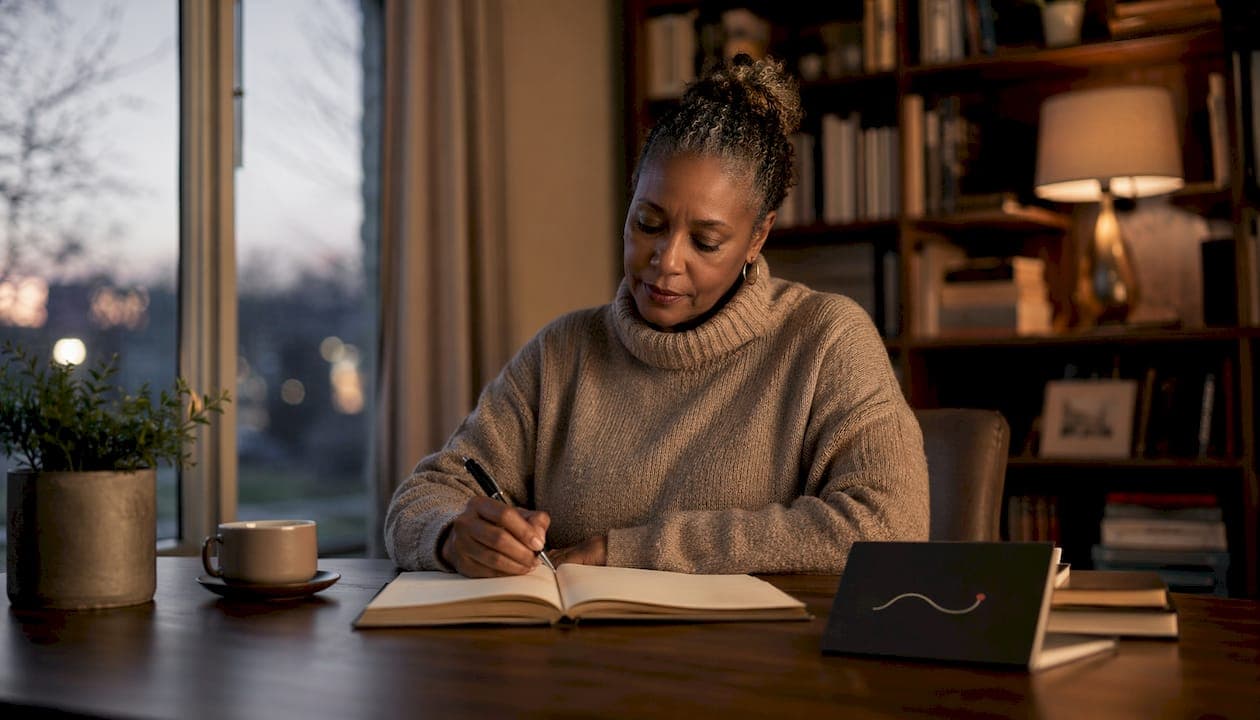
A personal legacy is defined as the values, stories, relationships, and daily actions you leave behind. It is not your estate plan or your net worth. It is the emotional and relational imprint you make on the people around you, and it is something you can shape intentionally, starting right now. For women over 40, the work of building a lasting legacy is not a distant project. It is the most alive question of this season. Psychologists call this stage generativity, the drive to contribute something meaningful beyond yourself. Research confirms that 94% of adults define a life well lived through the quality of their relationships, not the size of their bank account. That number reframes everything.
Why midlife is the ideal time to create personal legacy and meaning
Midlife is not a pause. It is a pivot point with real psychological weight behind it.
Erik Erikson's theory of psychosocial development identifies ages 40–60 as the stage of generativity versus stagnation. Generativity is the drive to nurture, guide, and contribute to something larger than yourself. Women who engage this drive report higher life satisfaction, stronger relationships, and a clearer sense of direction. Women who avoid it often describe a creeping sense of purposelessness, even when their lives look full from the outside.
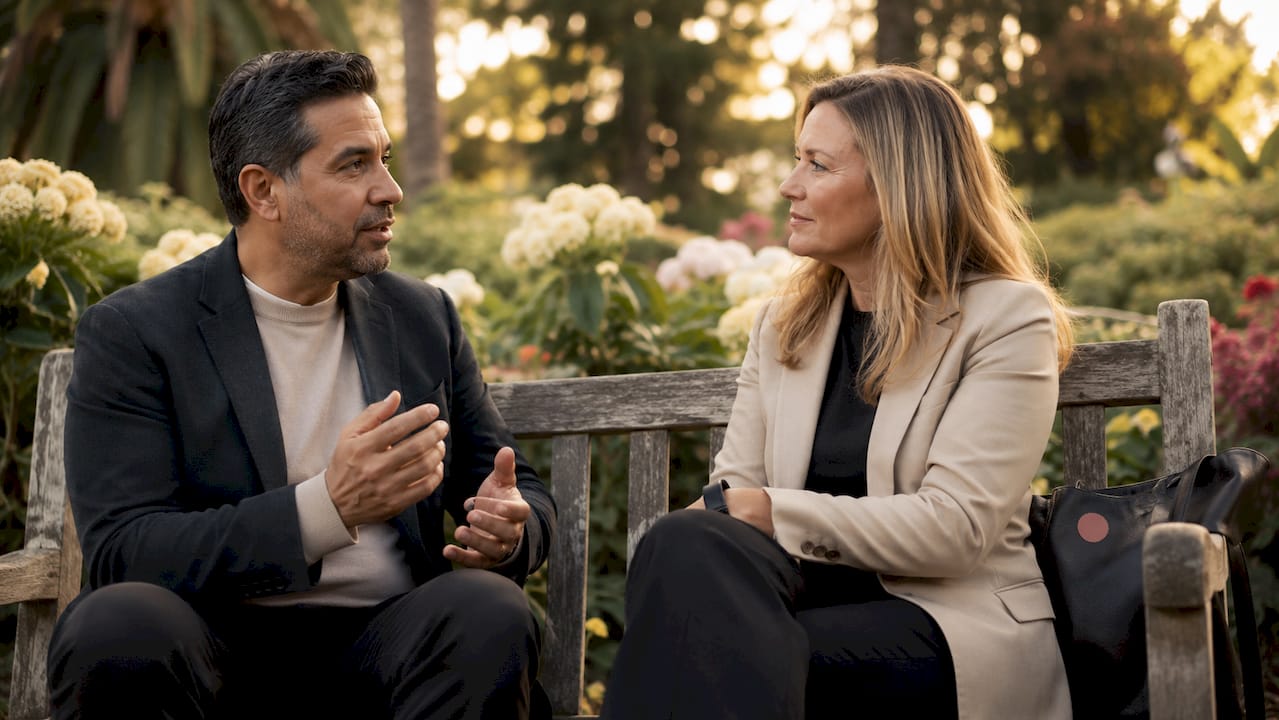
Modern research supports this. A study identifying 16 distinct sources of purpose found that legacy creation, prosocial action, and self-improvement are among the strongest predictors of well-being. Legacy is not a soft concept. It is a measurable contributor to life satisfaction and cognitive health.
Women at midlife face a specific opportunity here. Many have spent decades prioritizing others' needs. The children, the career, the household, the aging parents. At 40, 50, or 60, a new question surfaces: What do I want to leave behind? That question is not selfish. It is the most generous thing you can ask, because the answer shapes how you show up for everyone around you.
- Legacy work at midlife improves your sense of direction and daily motivation.
- It strengthens your relationships by making your values visible and explicit.
- It gives your experiences, including the hard ones, a coherent meaning.
- It creates something real for the people who come after you.
Pro Tip: You do not need a life crisis to begin legacy work. The clearest signal that it is time is simply the feeling that something more is possible.
What are the best tools for crafting a meaningful legacy?
Legacy design is the practice of integrating your values, purpose, identity, and intended impact into a forward-looking structure. Think of it less like writing a will and more like designing the architecture of a life that keeps speaking after you leave a room.
The foundation is clarity about your values. Before you write a word or record a single story, you need to know what you actually stand for. Not the values you inherited or performed, but the ones that feel true when no one is watching. This is where values-based living becomes the bedrock of everything else.
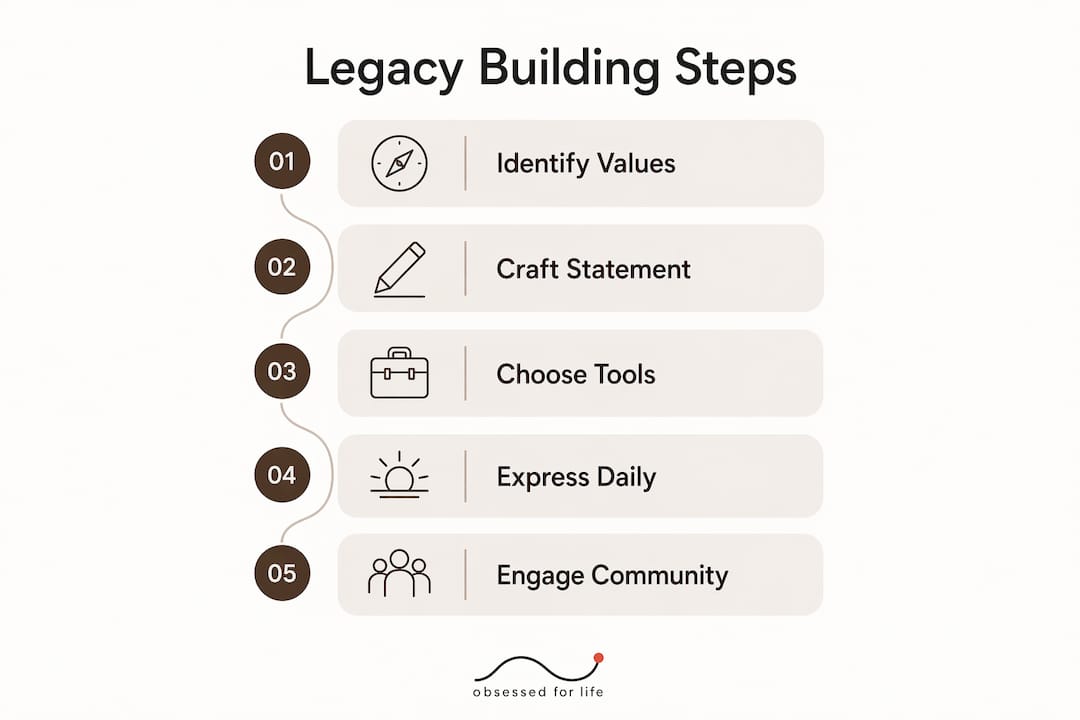
Once your values are named, you have a range of tools to express and document them.
| Method | Best use | Strength | Watch out for |
|---|---|---|---|
| Legacy letter | Sharing values with family | Personal, emotional, direct | Waiting until it feels "perfect" |
| Reflective journal | Ongoing self-discovery | Builds clarity over time | Inconsistency without a rhythm |
| Spoken story or audio | Capturing voice and tone | Preserves personality | Technical barriers to getting started |
| Legacy statement | Guiding daily decisions | Concise and actionable | Being too vague to be useful |
| Ethical will | Transmitting wisdom to heirs | Dual benefit for writer and reader | Confusing it with a legal document |
Ethical wills offer a particularly underused form of legacy documentation. Unlike a legal will, an ethical will captures your beliefs, lessons, and hopes for the people you love. Research shows it benefits both the writer, who gains clarity and meaning, and the recipients, who receive genuine guidance.
Specificity matters more than most people expect. A legacy statement that says "I want to be remembered as kind" is too vague to guide anything. A statement that says "I want my daughter to know that she is allowed to take up space, and I showed her that by speaking up at every table I sat at" is a navigational instrument. It tells you what to do on a Tuesday morning.
Pro Tip: Write your legacy statement in one sentence first. If you cannot say it in one sentence, you have not found the core of it yet.
Common barriers include perfectionism, the belief that your story is not interesting enough, and the habit of waiting for a quieter season. None of these are real obstacles. They are postponements dressed up as reasons.
How do you express your legacy through daily life and relationships?
Legacy is not built in a single afternoon of writing. It is built in the ordinary texture of your days.
Make your values visible in small moments
The most durable legacies are not announced. They are demonstrated. When you consistently show patience, or speak honestly, or choose generosity even when it costs you something, the people around you absorb that. They carry it forward without being told to. Reflection practices help you identify which values you are already living and which ones you only intend to live.
Share your stories with intention
Stories are the primary vehicle for legacy. Not polished, edited stories. Real ones. The time you failed and what you learned. The moment you changed your mind. The thing you wish someone had told you at 25. These stories, told in conversation, written in letters, or recorded on your phone, become the living record of who you were and what you believed.
Here is a practical sequence to build legacy into your week:
- Set aside 15 minutes each Sunday to write one memory, lesson, or value in a dedicated notebook.
- Tell one true story to someone you love each week, without a point to prove, just to share.
- Record a short audio message on your phone for someone important, once a month.
- Review your legacy statement quarterly and ask whether your recent actions reflect it.
- Identify one person you can mentor or guide, and show up for them consistently.
- Create one family or community ritual that carries your values forward, a dinner tradition, a yearly letter, a shared practice.
Engage your community in the work
Legacy does not live only in documents. It lives in the communities you build and the people you invest in. Mentoring a younger woman, contributing to a cause that reflects your values, or simply being the person in your family who tells the truth with kindness, these are all forms of legacy thinking in midlife that compound over time.
What are the most common mistakes in building a personal legacy?
The most common mistake is waiting. The 'someday' trap is the belief that legacy work belongs to a future version of you who has more time, more clarity, or a tidier life. That version never arrives. Legacy builds through small, consistent acts today, not through postponed milestones.
A second mistake is staying vague. Broad intentions like "I want to make a difference" feel meaningful but guide nothing. The women who build the most resonant legacies are specific. They name the people they want to impact, the values they want to transmit, and the behaviors they are willing to practice.
- Vague: "I want to be a good example."
- Specific: "I want my niece to see me pursue something that scares me, so she knows she can too."
A third mistake is treating legacy as a solo project. Your legacy lives in relationship. Sharing your values, stories, and intentions with the people who matter to you is not oversharing. It is an act of love and clarity.
Emotional barriers are real too. Writing about your life can surface regret, grief, or the uncomfortable awareness of time passing. These feelings are not signs to stop. They are signs that the work is reaching something true. Allow the discomfort. Write through it.
Pro Tip: If you feel stuck, start with gratitude. Write about one person who shaped you and why. That single act of acknowledgment often unlocks everything else.
Key Takeaways
Building a lasting legacy requires intentional, specific, and consistent action rooted in your values, relationships, and daily habits, not wealth or future plans.
| Point | Details |
|---|---|
| Legacy is relational, not financial | 94% of adults define a meaningful life through relationships, not wealth accumulation. |
| Midlife is the right time to start | Erikson's generativity stage (ages 40–60) is the prime window for purposeful legacy work. |
| Specificity drives real impact | A vague legacy intention guides nothing; name the people, values, and behaviors you commit to. |
| Daily habits build the structure | Legacy grows through small, consistent acts, not grand gestures or perfect timing. |
| Documentation benefits everyone | Ethical wills and legacy letters help the writer find clarity and give recipients lasting guidance. |
What I have learned about legacy that most articles miss
By Theresa Stairs
Most legacy advice focuses on what you will leave behind. I think that framing gets it slightly wrong. The women I have seen do this work most powerfully are not thinking about their death. They are thinking about their life. They are asking: what do I want to be true about how I lived? That shift changes everything.
Legacy is not a document you produce. It is a posture you practice. It is the way you enter a room, the questions you ask, the stories you choose to tell, and the ones you finally decide to stop hiding. When you treat your values as something to be expressed rather than something to be explained, your legacy starts building itself in real time.
The other thing I have noticed is that women over 40 tend to underestimate the power of their ordinary stories. They wait for something dramatic or impressive to share. But the stories that land, the ones that get repeated at family dinners twenty years from now, are almost always the quiet ones. The time you chose integrity over convenience. The moment you admitted you were wrong. The afternoon you sat with someone in their grief and said nothing, because nothing was exactly right.
Start there. Start with what is already true about you. The benefits of values-based living are not theoretical. They show up in how you feel on an ordinary Wednesday. That is where your legacy lives.
— Theresa Stairs
Your next step with Obsessedforlife
If this article stirred something in you, that is worth paying attention to.
Obsessedforlife is a self-discovery platform built specifically for women 40 and beyond who are ready to ask what they truly want from this chapter. The Obsession Map, an original guided assessment, helps you identify what brings you joy, what values drive you, and what kind of life you want to be living and leaving behind. It is not a quiz. It is a reflection tool designed to give you a clearer picture of who you are right now, so the path forward feels genuinely yours. If you are ready to move from intention to clarity, start with the Obsession Map and let your values lead.
FAQ
What does it mean to create a personal legacy?
A personal legacy is the values, stories, relationships, and daily behaviors you leave behind. It is defined less by what you own and more by how you made people feel and what you taught them by example.
When is the right time to start building a lasting legacy?
The right time is now. Research on Erikson's generativity stage shows that ages 40–60 are the prime window for legacy work, and waiting for a "better" moment is the most common reason people never begin.
What is an ethical will and how does it support legacy?
An ethical will is a personal document that captures your values, beliefs, and life lessons for the people you love. Unlike a legal will, it transmits wisdom rather than assets, and writing it benefits the author as much as the recipients.
How do I find personal purpose as part of my legacy?
Start by naming your core values with specificity. Research identifies legacy creation, prosocial action, and self-improvement as key sources of purpose that measurably improve life satisfaction and well-being.
Can legacy building improve my daily life, not just my future impact?
Yes. Naming your values and living by them creates clarity in everyday decisions, strengthens your relationships, and gives your experiences a coherent meaning that improves well-being in the present, not just in memory.