
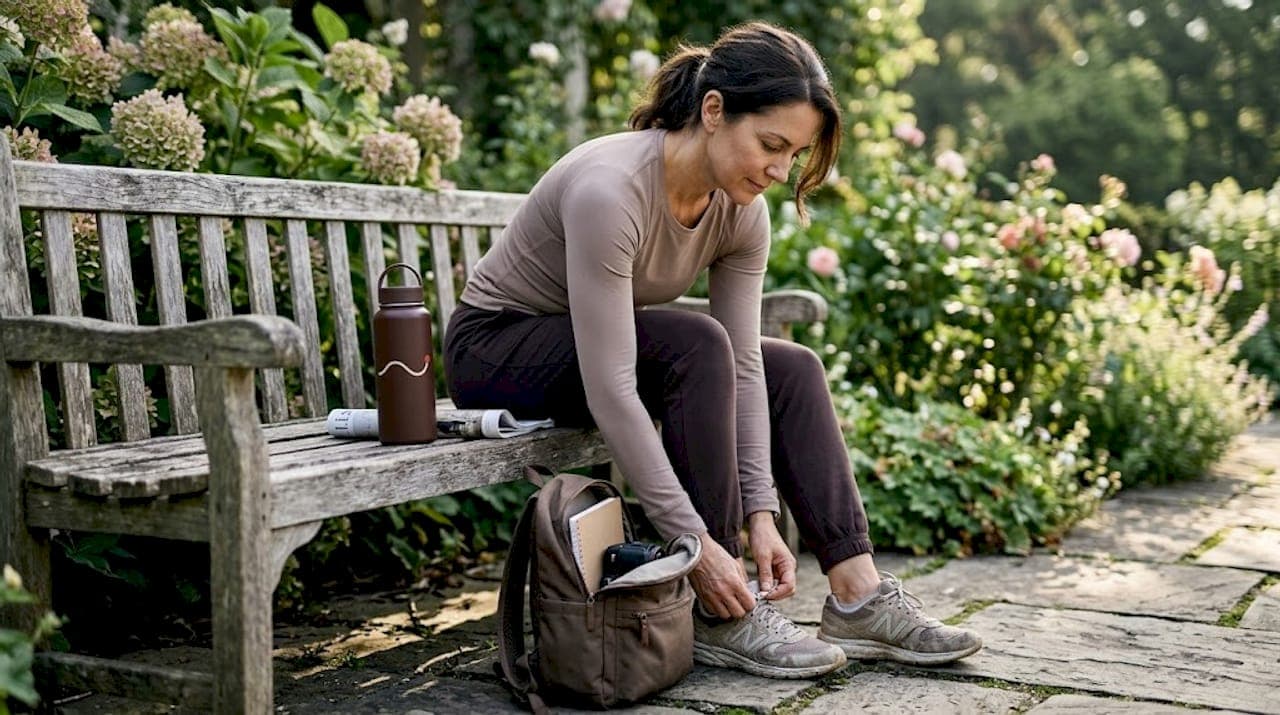
There’s a restlessness that arrives in your forties. You’ve built things, shown up for people, and checked the expected boxes. Now you’re standing in a quieter moment, asking a question that belongs entirely to you: what do I want? The experiences worth pursuing after 40 aren’t about recapturing your twenties or proving something to anyone. They’re about choosing, deliberately and with full self-awareness, what this chapter is actually for. That question is an invitation. And it’s one of the most powerful questions you’ll ever answer.
Table of Contents
Key Takeaways
| Point | Details |
|---|---|
| Physical adventures are accessible | Midlife trekking and dance require consistent daily habits, not extreme training regimens. |
| Solo travel is thriving | Up to 90% of small-group travelers over 40 travel solo, seeking connection and cultural depth. |
| Creative hobbies protect the mind | Learning a language or musical instrument builds cognitive resilience and social opportunity. |
| Career pivots carry strong odds | 82% of people who changed careers after 45 reported successful transitions with less stress. |
| Community fuels fulfillment | Meaningful social connection is one of the strongest predictors of life satisfaction after 40. |
1. Physical adventures that invigorate body and spirit
Your body after 40 is an instrument, and it responds beautifully when you treat it with intention rather than force.
The most inspiring physical experiences worth pursuing after 40 tend to be the ones that feel slightly audacious. Trekking to Everest Base Camp. A lodge-to-lodge walk through the Andes. A week of flamenco immersion in Seville. These aren’t fantasies reserved for younger women. Midlife trekkers rely more on disciplined daily movement and breath work than on specialized high-intensity training. Daily walking, meditation, and pranayama are the real preparation.
What matters most is building a sustainable rhythm before you attempt anything demanding. Research from Stanford Medicine confirms that adults over 40 should engage in muscle-strengthening activities at least twice weekly, paired with increased protein intake, to maintain the muscle mass that enables adventures.
Consider starting with these physical experiences:
-
A multi-day hiking trail (the Camino de Santiago remains one of the most transformative for women over 40)
-
Beginner or intermediate dance classes, from salsa to contemporary
-
Yoga retreats focused on alignment and breath rather than performance
-
Open-water swimming in natural settings
-
Cycling tours through wine regions or coastal routes
Pro Tip: Don’t wait until you feel “ready.” Start a 30-minute daily walk today. Consistency over six months will prepare your body for almost any adventure you choose.
The shift toward alignment-based movement and sleep protection matters deeply during perimenopause and beyond. You’re not training less. You’re training smarter, and that distinction changes everything.

2. Travel experiences that go beyond sightseeing
There's a version of travel that leaves you unchanged. You see the landmarks, eat the food, take the photos. And there’s another version that quietly rearranges something inside you. After 40, you have the discernment to choose the second kind.
The most meaningful travel experiences over 40 center on cultural depth, genuine human connection, and the particular freedom of moving through the world on your own terms. Research shows that 80 to 90% of participants in small-group travel over 40 join solo, actively seeking curated local experiences and boutique accommodations rather than the anonymity of large groups.
The destinations that consistently deliver layered, transformative experiences for women in this season include Morocco (for its sensory richness and artisan culture), Japan (for its quiet precision and ceremony), Peru (for its physical and spiritual scale), and Portugal (for its unhurried warmth and affordability).
What separates a good trip from a life-changing one often comes down to the group's structure. The best travel groups for women in their 40s offer small sizes of 6 to 10 participants, no single supplements, guaranteed boutique single rooms, and pre-trip community-building calls.
| Feature | Large group tours | Small women-only groups |
|---|---|---|
| Group size | 20 to 50 people | 6 to 10 people |
| Single room policy | Often extra cost | No single supplement |
| Cultural immersion | Surface-level | Deep and guided |
| Pre-trip connection | Rarely offered | Community calls included |
| Flexibility | Low | Moderate to high |
Pro Tip: When evaluating any travel company, ask two questions: Do you guarantee single rooms without extra charges? Do you offer pre-trip calls to connect participants? If the answer to either is no, keep looking.
3. Creative and intellectual pursuits that spark joy
One of the quietest and most profound life changes after 40 is the permission you give yourself to be a beginner again. Not because you have to. Because you want to.
Learning a new language is one of the most cognitively protective and socially expansive hobbies to start after 40. Spanish, in particular, opens doors across dozens of countries and communities. The key is choosing the right format. Spanish curriculum formats for adult learners range from immersive conversation-based programs to structured grammar-first approaches, and the right fit depends entirely on how your mind absorbs information best.
Beyond language, consider these creative pursuits:
-
Writing: memoir, personal essays, or even fiction. Your life experience is material no 25-year-old can access.
-
Music: learning an instrument as an adult activates parts of the brain that few other activities reach.
-
Pottery or ceramics: tactile, meditative, and deeply satisfying in a way that screen-based hobbies rarely are.
-
Painting or drawing: no prior talent required. The process matters more than the product.
-
Photography: a practice that trains you to see the world differently, not just document it.
Psychological experts point to narrative therapy as one of the most powerful tools for personal growth after 40. The idea is simple: you consciously rewrite the story you’ve been telling about yourself, subtracting obligations that no longer serve you and adding experiences that reflect who you’re becoming. Creative pursuits are one of the most natural ways to do exactly that.
4. Career pivots as a form of personal reinvention
A career change after 40 is not starting over. It’s redirecting. And the data on this is more encouraging than most people realize.
Career pivots over 40 have an 82% success rate when built on the 50% overlap principle: your new direction uses at least half of the skills you already have. Salary recovery or growth typically follows within 12 to 24 months. More telling is this: 82% of people who changed careers after 45 reported successful transitions, with 87% happy with the change and 65% experiencing less stress afterward.
The roles that attract the most successful midlife pivots tend to share a common thread: they reward experience, judgment, and the kind of relational intelligence that only comes from years of navigating complex situations. Project management, data analytics, digital marketing, and consulting all fall into this category.
| Career pivot factor | Why it matters |
|---|---|
| 50% skill overlap | Reduces learning curve and accelerates income recovery |
| One focused certification | Signals credibility without years of retraining |
| Values alignment | Predicts long-term satisfaction more than salary alone |
| Network from previous roles | Often, the fastest path to new opportunities |
Pro Tip: Before committing to a full pivot, take one course or earn one certification in your target field. It clarifies whether reality matches the idea and gives you something concrete to discuss in interviews.
Women in their 40s often wrestle with imposter syndrome during this process. What they tend to underestimate is their own experiential aptitude: the accumulated wisdom, pattern recognition, and professional credibility that makes their midlife pivot uniquely powerful. You can also explore switching careers without starting over for practical frameworks that honor what you’ve already built.
5. Social and community experiences that create belonging
Loneliness is one of the least-discussed challenges of midlife. Friendships thin out. Roles shift. The social structures that once organized your time quietly dissolve. Building new community after 40 is not a nice-to-have. It’s one of the best experiences after 40 you can invest in.
The most fulfilling social experiences tend to be organized around a shared purpose or interest, not just proximity. Consider:
-
Joining a book club focused on a genre you’ve never explored
-
Volunteering with an organization whose mission genuinely moves you
-
Participating in a mentoring program for younger women in your field
-
Attending skill-based workshops where learning creates natural connection
-
Joining a walking group, hiking club, or travel community for women over 40
What makes these experiences stick is the regularity of contact and the sense that your presence matters. A book club you attend once is a social event. Once you return to monthly for two years, it becomes a community.
Balancing social engagement with solitude is equally worth considering. Many women over 40 discover, sometimes for the first time, that they genuinely enjoy their own company. Protecting time for reflection is not antisocial. It’s how you stay connected to what you actually want, rather than what others expect of you.
6. Wellness rituals as an experience in themselves
Personal growth after 40 doesn’t always look like a dramatic external change. Sometimes it looks like finally sleeping well. Or building a morning practice that belongs entirely to you.
Wellness in midlife is most powerful when it shifts from performance to alignment. That means moving away from punishing workouts and toward practices that restore rather than deplete. Sleep becomes a non-negotiable. Breath work, journaling, and quiet morning rituals create the internal structure that makes every other experience richer.
Think of your wellness practice as the foundation beneath every adventure, creative pursuit, and social connection you build. Without it, even the most exciting experiences feel hollow. With it, even ordinary days carry a sense of meaning.
The rituals that matter most are the ones you actually do. Start with one. A ten-minute morning walk. A nightly gratitude practice. A weekly digital detox. These are not small things. They are the architecture of a life you recognize as your own.
My perspective on choosing experiences after 40
I’ve spent a lot of time thinking about why so many women arrive at 40 or 50 feeling like they’ve been living someone else’s life. Not because they made wrong choices. But because they made choices without ever fully asking what they wanted.
What I’ve learned is that the fear of starting something new at this age is almost always louder than the actual difficulty of doing it. I’ve seen women complete their first trek at 58, publish their first essay at 63, and change careers at 52 in ways that transformed not just their income but their entire sense of self. Imposter syndrome is real. And it’s also not the truth.
The societal narrative that midlife is a time of narrowing options is one of the most limiting ideas I’ve encountered. In my experience, the opposite is true. You arrive at 40 with something no younger version of you had: the clarity to know what actually matters, and the courage that comes from having already survived hard things.
My honest advice? Stop waiting for certainty. Choose one experience that scares you just enough to feel alive. Then notice what it opens.
— Theresa
Ready to find what’s next for you?
If this article stirred something in you, that feeling is worth following. Obsessedforlife was built for exactly this moment: the one where you stop organizing your life around everyone else’s needs and start asking what you genuinely want.
Through the Obsession Map, an original guided assessment, you can explore what brings you joy in this season, what values are driving you now, and what experiences you haven’t yet considered. Whether you’re 42 or 68, you’re not starting over. You’re finally beginning. Visit Obsessed for Life to explore programs designed to help you build a life that feels like yours. And if you’re thinking about what a vibrant life looks like further down the road, this guide on life after 65 is worth your time too.
FAQ
What are the best experiences worth pursuing after 40?
The best experiences after 40 combine personal meaning with practical accessibility. Physical adventures, cultural travel, creative hobbies, career pivots, and community building all rank highly, especially when chosen based on your values rather than external expectations.
Is it too late to start new hobbies after 40?
It is not too late. Adults who begin creative or physical hobbies after 40 report significant gains in cognitive health, social connection, and personal satisfaction. The learning curve is real, but so is the reward.
How do I choose a travel experience as a solo woman over 40?
Look for small-group travel companies that offer groups of 6 to 10 participants, no single room supplements, and pre-trip community calls. Research shows that up to 90% of participants in these groups travel solo and find genuine connection through the shared experience.
Can a career change after 40 actually succeed?
Yes, and the data is clear. Career pivots built on the 50% skill overlap principle carry an 82% success rate, with most women recovering or growing their salary within one to two years of making the change.
How do I start personal growth after 40 if I don’t know where to begin?
Start with one question: what have I always been curious about but never made time for? That curiosity is a signal. Follow it into one small experience, one class, one trip, one conversation, and let that first step show you the next one.