The types of joyful aging practices that research consistently supports fall into eight core categories: focusing on your strengths, lifelong learning, social connection, daily wellness habits, gratitude, finding purpose, embracing freedom, and the four pillars of the Joyspan framework. Gerontologist Kerry Burnight, PhD, frames joy in later life not as something that happens to you, but as something you actively practice, much like physical fitness. Each of the practices below is evidence-backed, adaptable to your current abilities, and worth starting today.
At a glance, the core types of joyful aging practices are:
- Focusing on strengths and abilities rather than losses or limitations
- Lifelong learning to keep the mind engaged and neurologically protected
- Social connection through quality relationships and community
- Daily wellness habits including movement, nutrition, and mindfulness
- Gratitude practice to build emotional resilience through small, savored moments
- Purpose and meaning through giving, mentoring, and creative contribution
- Embracing later-life freedom with curiosity and an open mindset
- The Joyspan pillars (Grow, Connect, Adapt, Give) as an integrated daily framework
1. Shift your focus to what you can do
The most powerful positive aging strategy you can adopt costs nothing and requires no equipment. It is a deliberate shift in attention, away from what aging has taken and toward what you still carry. Positive beliefs about aging predict measurable improvements in both cognitive and physical function over time, with research showing that 45.15% of adults 65+ showed improvement across a 12-year period when they held positive age beliefs.
This is not wishful thinking. The link between belief and biology is well-documented: positive age beliefs improve walking speed, memory, and self-confidence. Reframing aging from a deficit model to a growth model changes what you notice, what you attempt, and ultimately what you achieve.
Practical ways to build this habit include writing down three things you did well each week, revisiting skills you have built over decades, and noticing where your experience gives you an advantage that youth simply cannot replicate.
Pro Tip: Set a weekly "strengths audit" on your calendar. Spend five minutes listing what you handled well that week. Over time, this practice rewires your default lens from loss to capability.
2. Keep your mind active through lifelong learning
Pursuing new knowledge is not merely enriching. It is neurologically protective, supporting cognitive health while cultivating a genuine sense of agency. You do not need a formal degree. You need curiosity and a willingness to move past your comfort zone.
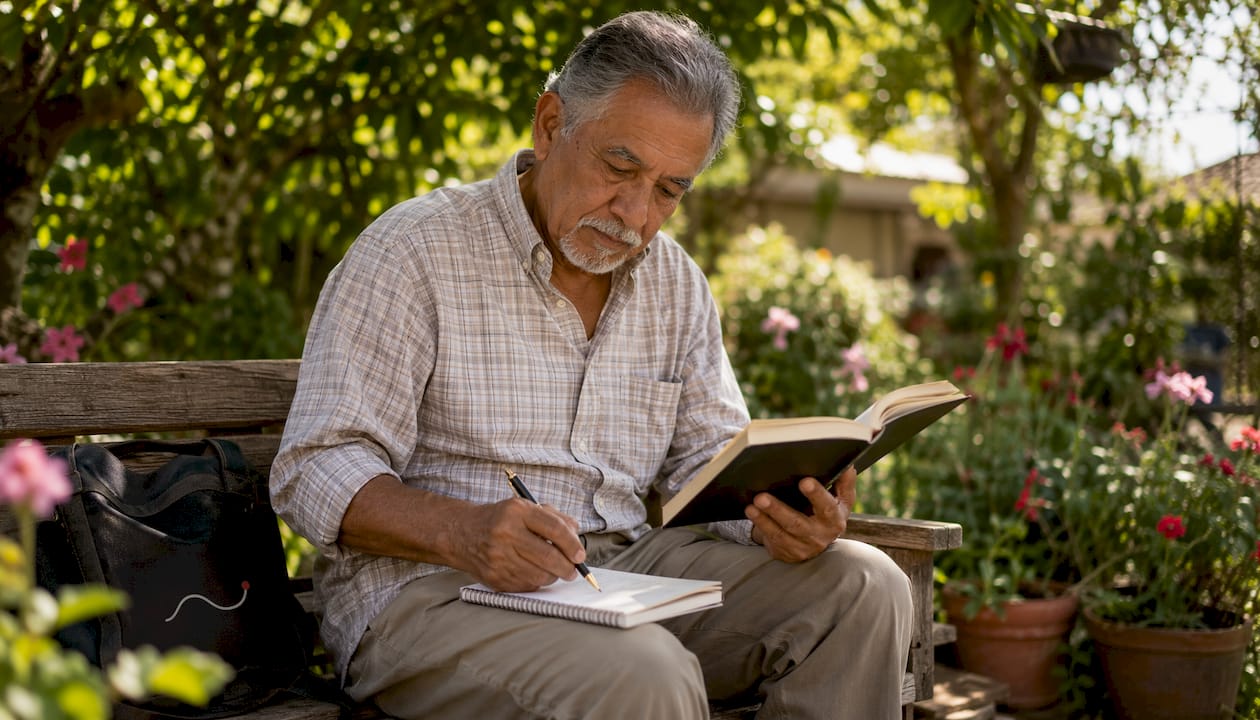
The National Institute on Aging (NIA) points to mentally stimulating activities as part of a healthy, active aging lifestyle that benefits mind, spirit, and body together. Stanford Medicine experts add that reading, learning a new language, keeping a written journal, or engaging in complex conversations all count as genuine cognitive exercise.
Learning activities worth exploring:
- Take a cooking, art, dance, or language class at a local community college or library (many offer free or discounted courses for older adults)
- Learn to play a musical instrument, or pick up one you set aside years ago
- Try improv, computer coding, or creative writing
- Join a book or film club that meets regularly
- Explore online platforms offering structured courses in subjects that genuinely interest you
- Teach a skill you already have to someone who wants to learn it
3. Stay connected through community and relationships
Quality of relationships is the single strongest predictor of longevity and well-being in later life. Not the number of people you know. The depth of the connections you tend.
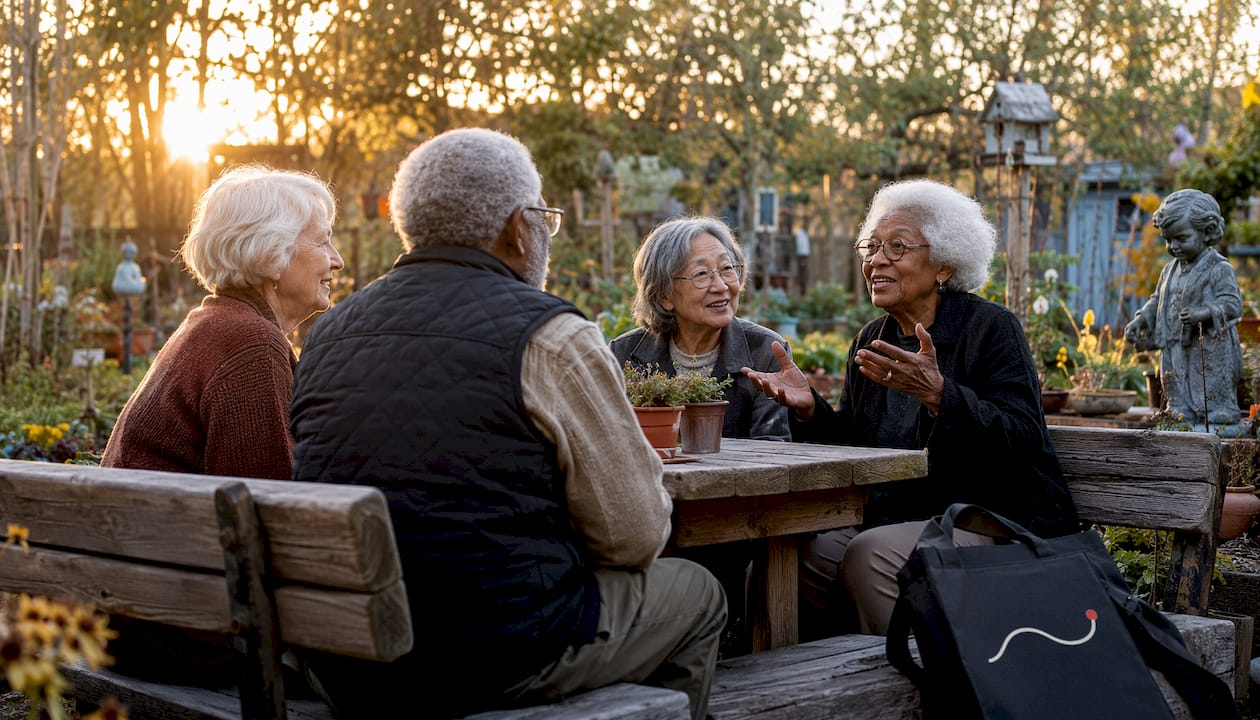
Loneliness and social isolation increase the risk of depression and anxiety, which ripple into physical health in ways that compound over time. The role of community in midlife growth is not a soft benefit. It is a health imperative. Investing in relationships means nurturing the ones you already have, building new ones with intention, and showing up for your community in ways that feel meaningful to you.
Intergenerational connection deserves particular attention. Bonding activities with grandchildren and younger generations create mutual benefit, offering older adults a sense of relevance and younger people the irreplaceable gift of lived wisdom.
4. Make wellness part of everyday life
Healthy aging practices work best when they are woven into your daily rhythm rather than treated as a separate project. Movement, nutrition, and emotional care belong together.
Stanford Medicine recommends 150 minutes per week of moderate-intensity aerobic activity, along with muscle-strengthening exercises at least twice a week, for adults in their 60s and 70s. Simple options like chair squats, wall push-ups, and resistance bands are as effective as gym equipment for maintaining strength and function. On the nutrition side, adults in this age group benefit from 1.0–1.3g of protein per kilogram of body weight daily, ideally from whole food sources within a Mediterranean-style eating pattern.
Mindfulness for emotional well-being rounds out the picture. The NIA specifically lists gratitude and mindfulness practice among its recommended stress-relieving habits for older adults.
Daily wellness habits to build in:
- Walk, bicycle, swim, or dance for aerobic movement you actually enjoy
- Include lean protein at every meal (eggs, Greek yogurt, tofu, fish, legumes)
- Fill half your plate with fruits and vegetables
- Practice tai chi or yoga for balance, flexibility, and calm
- Prioritize sleep as a non-negotiable recovery tool
- Schedule regular preventive screenings and annual physicals
5. Practice gratitude daily
Gratitude is one of the simplest and most well-supported positive aging strategies available. Dr. Burnight calls these "micro-joys," the deliberate appreciation of small pleasures like sunlight through a window, a piece of music that moves you, or a good conversation over coffee. Research in positive psychology shows that actively savoring these moments, rather than letting them pass unnoticed, has measurable effects on well-being over time.
The key word is deliberate. Micro-joys do not register unless you pause to notice them. That pause is the practice. It takes less than a minute and builds emotional resilience the way small deposits build a savings account.
Pro Tip: Anchor your gratitude practice to something you already do every morning, like making tea or stepping outside. Name one specific thing you appreciate before you move on. Specificity matters more than length.
6. Find new purpose and meaning in later years
Purpose is not something you either have or lack. It is something you actively cultivate through the choices you make about where to direct your time and attention. Small, daily contributions matter as much as grand gestures, and often more, because they are sustainable.
The generative practices that tend to sustain joy in later life share a common thread: they connect you to something beyond your own daily concerns. Volunteering, mentoring, creative projects, and community involvement all qualify. So does teaching a grandchild a skill, writing down family stories, or simply being reliably present for someone who needs you.
Ideas for purposeful engagement:
- Volunteer through programs like Senior Corps (nationalservice.gov) or volunteer.gov
- Mentor someone earlier in their career or creative path
- Start a creative project with no audience requirement, writing, painting, gardening, building
- Join a committee or working group at your place of worship or community center
- Teach a skill you have spent years developing
7. Embrace the freedom and opportunities of later life
Later life carries freedoms that earlier decades rarely allowed. Fewer obligations dictated by others. More room to follow what genuinely interests you. The psychological research on this is clear: people who approach this season with curiosity rather than resistance report higher life satisfaction and better emotional health.
Living fully in later years means treating this chapter as an invitation rather than a waiting room. Try activities you postponed for decades. Travel with a group. Take a class in something you always dismissed as "not for you." The willingness to begin something new, even imperfectly, is itself a joyful aging practice.
Pro Tip: Write down three things you always wanted to try but never had time for. Pick one and take a single concrete step toward it this week. You are not committing to mastery. You are committing to curiosity.
8. The Joyspan framework: four pillars for thriving in later life
Dr. Kerry Burnight, PhD, developed the Joyspan framework drawing on centenarian studies, the Harvard Study of Adult Development, and MIT AgeLab research on fulfillment. Her four pillars describe the daily practices she considers non-negotiable for a flourishing later life.
"It takes work to cultivate the quality of your long life," Dr. Burnight says. "Just like eating well or lifting weights, the practices that bring joy are things we have to choose even when we don't feel like it."
| Pillar | Core practice | Key benefit |
|---|---|---|
| Grow | Pursue new knowledge, skills, and creative challenges | Neurological protection, sense of agency |
| Connect | Invest in quality relationships and community | Longevity, cognitive health, life satisfaction |
| Adapt | Meet change and loss with equanimity through mindfulness, therapy, or community | Psychological resilience, sustained well-being |
| Give | Contribute time, wisdom, or care to others | Higher happiness and meaning |
The Adapt pillar deserves particular attention because it is the one most people overlook. Life's second half brings real losses and transitions. The capacity to remain present and open during difficulty, rather than contracting around it, is what allows joy to coexist alongside pain. Dr. Burnight recommends building intentional coping strategies before you need them, whether through mindfulness, faith, therapy, or a trusted community.
The Give pillar closes the loop. Research on generosity is among the most consistent in well-being psychology: people who contribute to others report significantly higher happiness and meaning. You do not need to offer grand gestures. Your wisdom, presence, and humor are already enough.
Key Takeaways
Joyful aging is a daily practice, not a destination, and the most effective approach combines the Joyspan pillars of Grow, Connect, Adapt, and Give with concrete wellness habits and a deliberate focus on strengths.
| Point | Details |
|---|---|
| Joy is a skill, not a feeling | Gerontologist Kerry Burnight frames joy as something you practice daily, not something that arrives on its own. |
| Positive beliefs change outcomes | 45.15% of adults 65+ showed cognitive and physical improvement over 12 years when they held positive age beliefs. |
| Relationship quality predicts longevity | The Harvard Study of Adult Development found quality of relationships is the single strongest predictor of well-being in later life. |
| Protein intake supports independence | Adults in their 60s and 70s need 1.0–1.3g of protein per kilogram of body weight daily to maintain strength and function. |
| Small contributions sustain meaning | Daily acts of giving, however modest, consistently predict higher happiness and life satisfaction in later life. |
Ready to discover what lights you up in this season of life? The Obsession Map at Obsessedforlife is a guided self-discovery assessment designed for women 40 and beyond who are ready to stop asking what everyone else needs and start asking what they want. It reflects back a picture of your joy, your values, and the experiences waiting for you in this chapter.