
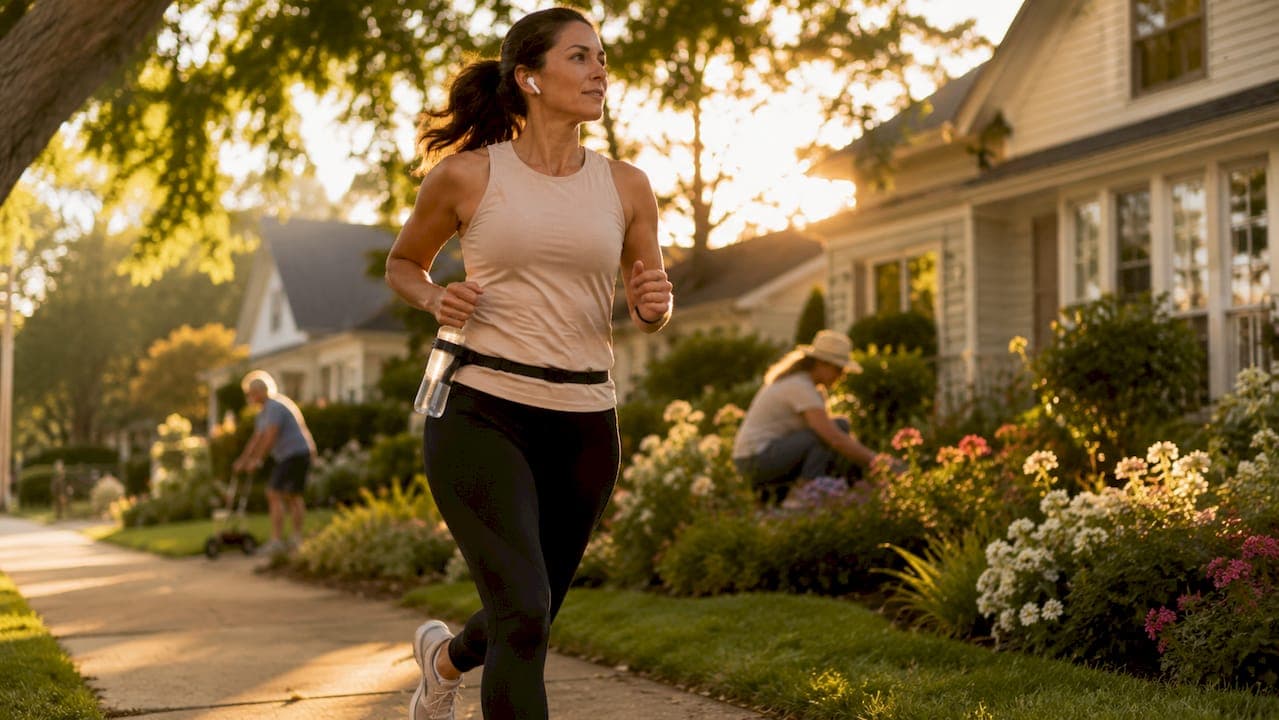
Vital aging is defined as an individual's intrinsic capacity and drive to live vigorously, dynamically, and with purpose as they grow older. It is not about fighting age. It is about understanding what does vital aging mean in practice: staying functionally strong, mentally engaged, and emotionally alive across every decade. The World Health Organization identifies vitality as one of five domains in its intrinsic capacity framework, alongside cognition, psychological well-being, sensory function, and locomotion. For women 40 and above, this framework is not a clinical abstraction. It is a map for living fully on your own terms.
What does vital aging mean, and how is it different from just getting older?
Vital aging and chronological aging are not the same thing. Your birth year is fixed. Your vitality is not. The concept of vital aging centers on healthspan, which refers to the years you live in good health, free from disabling disease, rather than the total number of years you live. That distinction changes everything about how you approach the second half of life.
Vitality functions as a dynamic biological signal. Research shows that decreases in vitality precede frailty, which means a drop in your energy, balance, or mental sharpness is not just an inconvenience. It is an early warning worth paying attention to. Catching that signal early creates room for preventive action, long before decline becomes fixed.
Frailty and vitality are often confused, but they describe opposite ends of the same continuum. Frailty is the accumulation of deficits. Vitality is the presence of capacity. You can be chronologically older and still score high on vitality markers. You can also be in your 40s and already showing signs of reduced vitality if lifestyle habits have been neglected for years.
Vitality markers worth knowing include:
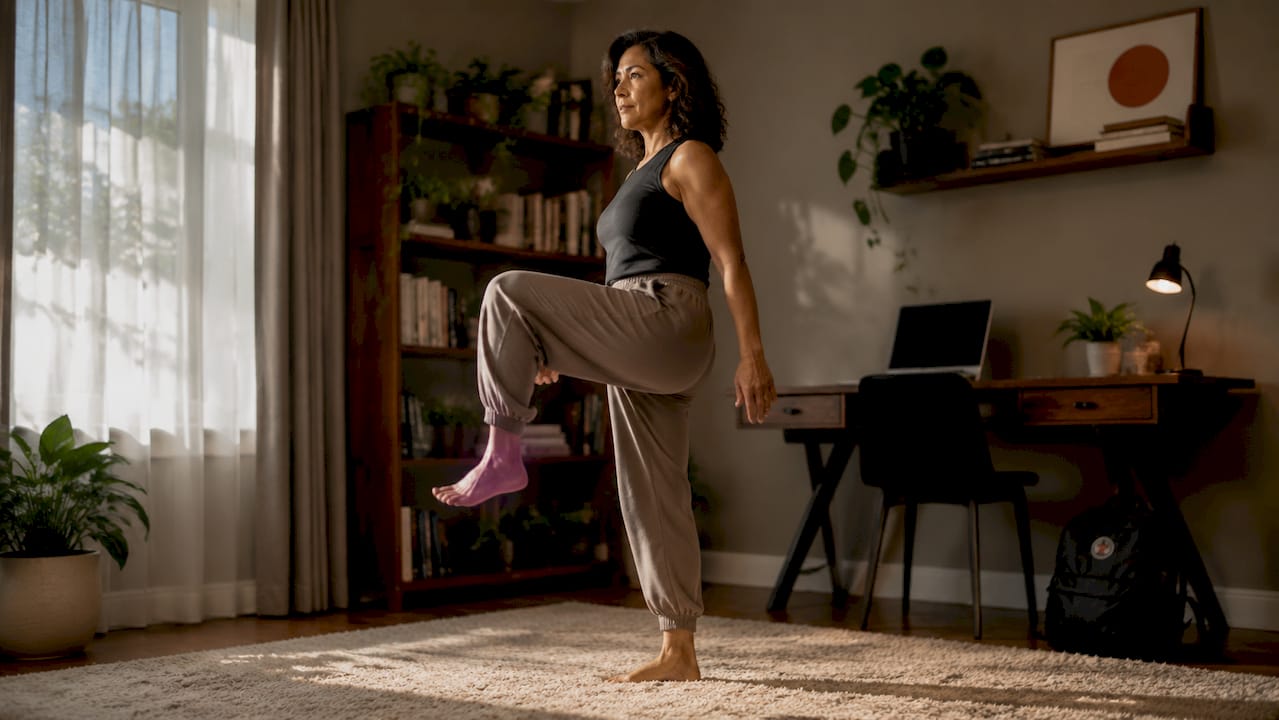
- Balance and stability: Can you stand on one leg for 10 seconds without holding anything?
- Energy levels: Do you feel genuinely rested after sleep, or perpetually depleted?
- Grip strength: A measurable indicator of overall muscle function and longevity.
- Mental sharpness: How quickly do you process new information or shift between tasks?
- Emotional resilience: How well do you recover from stress, disappointment, or change?
These are not abstract wellness concepts. They are functional signals that tell you where your vitality stands right now, and where it is headed.
What lifestyle habits actually support vital aging?
The research on vital aging points consistently toward the same cluster of habits. None of them are dramatic. All of them are cumulative. The healthspan you build in your 40s and 50s shapes the quality of your 70s and 80s in ways that no medical intervention can fully replicate later.
-
Prioritize strength and balance training. Muscle function declines significantly after 40, even when calorie needs decrease. Resistance exercise, done consistently two to three times per week, preserves the muscle mass that keeps you mobile, independent, and metabolically healthy. Balance work, such as single-leg standing or yoga, protects against falls and maintains the neurological pathways that keep you coordinated.
-
Adjust nutrition toward protein and quality. Maintaining muscle after 40 requires proactive protein intake, not just reduced calories. Prioritizing protein at each meal, along with vegetables, healthy fats, and whole grains, supports both muscle preservation and metabolic health. The goal is not thinness. The goal is functional strength.
-
Engage your mind and your social world. Community participation improves adherence to healthy habits and emotional well-being. Women who stay socially connected and mentally stimulated show stronger vitality markers over time. This includes book groups, creative classes, volunteer work, or simply maintaining close friendships with intention.
-
Manage stress as a health priority, not a luxury. Chronic stress accelerates biological aging. Practices like breathwork, time in nature, and setting clear boundaries are not indulgences. They are maintenance for your nervous system.
-
Schedule preventive health assessments. Bone density scans, cardiovascular screenings, and hormone panels give you data. Data lets you act before problems compound. Proactive, function-focused health management supports a longer healthspan with genuine quality of life.
Pro Tip: Think of your daily habits as micro-investments. Consistent modest movement and smart nutrition choices, repeated over years, compound into vitality the same way financial investments compound into wealth. Small and steady wins.
How can you measure and track your own vitality?
Tracking vitality does not require a lab. It requires honest, regular attention to a few key signals. The balance test is one of the most accessible: stand on one leg for 10 seconds with your eyes open. Research links this simple test to reduced mortality risk in adults aged 51 to 75. That one number tells you something real about your neurological and musculoskeletal health.
Subjective experience also matters. Research confirms that vitality is sensitive to age, meaning your felt sense of energy and mental clarity reflects genuine biological shifts, not just mood. Tracking how you feel across weeks, not just days, gives you a pattern worth acting on.
| Vitality marker | What it indicates | How to track it |
|---|---|---|
| Single-leg balance (10 sec) | Neurological and musculoskeletal health | Test weekly, note improvement |
| Morning energy level | Sleep quality and recovery capacity | Rate 1–10 each morning |
| Grip strength | Overall muscle function and longevity | Measure with a hand dynamometer |
| Mood and mental sharpness | Cognitive vitality and stress load | Journal briefly three times per week |
| Social connection frequency | Emotional vitality and isolation risk | Count meaningful interactions weekly |
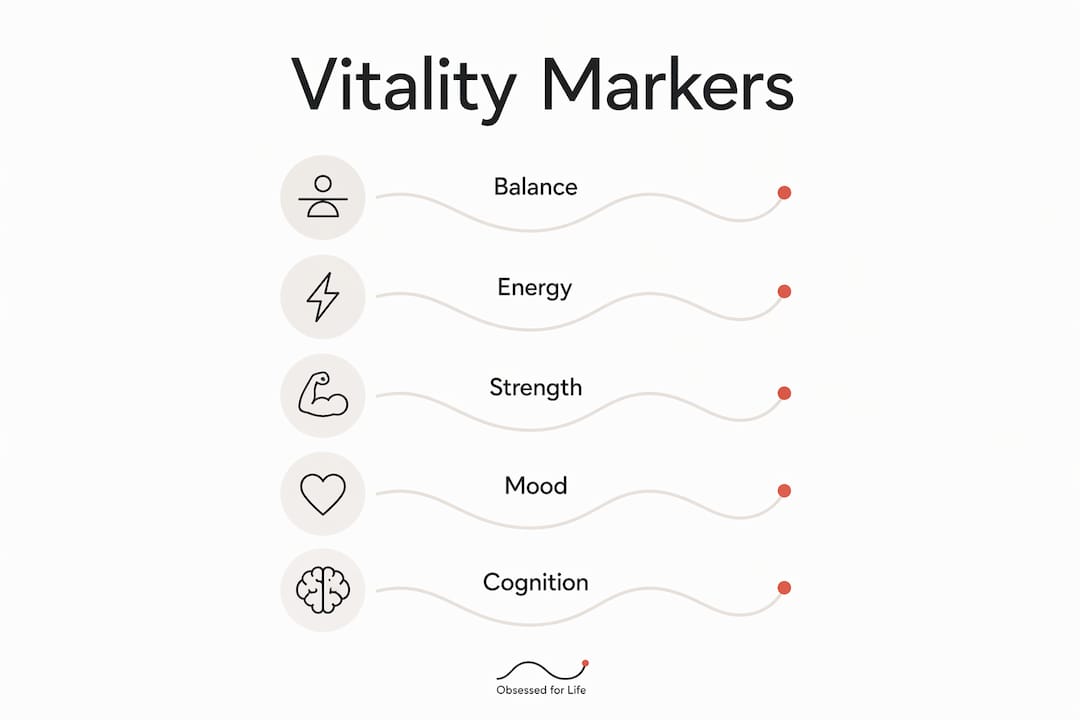
Use this table as a personal vitality dashboard. When two or more markers drop simultaneously, that is your signal to adjust, not to wait.
Pro Tip: Schedule a quarterly vitality check-in with yourself. Sit with your tracking notes, notice patterns, and make one small adjustment. You do not need a complete overhaul. You need consistent recalibration.
What are the broader benefits of vital aging beyond physical health?
The benefits of vital aging reach well past the physical. Psychological resilience, the ability to absorb difficulty and return to equilibrium, grows stronger when you invest in vitality. Women who maintain physical strength and social connection report higher levels of life satisfaction and lower rates of anxiety and depression in their later decades. That is not coincidence. It is the compounding effect of living fully in later years.
Social engagement is one of the most underrated pillars of vital aging. Social isolation is a major driver of health decline, particularly for women over 40. Community involvement and purposeful creativity are not optional extras. They are structural supports for your vitality.
The broader benefits of vital aging include:
- Emotional resilience: You recover faster from setbacks and adapt more readily to change.
- Sense of purpose: Engaging in meaningful work, creative projects, or community roles gives your days direction.
- Creative expression: Painting, writing, music, and craft activate parts of the brain that routine tasks do not. They also generate joy, which is its own form of medicine.
- Spiritual grounding: Many women over 40 report a deepening sense of what matters. Vital aging creates the physical and mental space to explore that.
- A growth mindset toward aging: When you see aging as a continuum of vitality rather than a countdown, you make different choices. Better choices.
Women who shift from surviving to thriving after 40 consistently describe the same turning point: the moment they stopped managing decline and started investing in growth. Vital aging is that investment, made daily, in small and meaningful ways.
Key Takeaways
Vital aging is defined as your capacity and intrinsic drive to live with energy, purpose, and function across every decade, shaped far more by lifestyle habits than by the year you were born.
| Point | Details |
|---|---|
| Vitality precedes frailty | A drop in energy or balance is an early signal, not an inevitable outcome. Act on it early. |
| Healthspan over lifespan | The goal is years lived well, not just years lived. Modifiable habits drive healthspan. |
| Strength and protein matter | Muscle declines after 40; resistance training and adequate protein are non-negotiable for vitality. |
| Social connection is structural | Isolation accelerates decline. Community and creative engagement are vitality habits, not luxuries. |
| Small habits compound | Consistent micro-investments in movement, nutrition, and rest build vitality over decades. |
What I've learned about vital aging that most articles won't tell you
The conversation around aging for women tends to focus on what is being lost. Hormones, collagen, metabolism, the body you had at 35. I spent years absorbing that narrative, and I want to be direct with you: it is the wrong frame entirely.
Vital aging is not a consolation prize for getting older. It is a genuinely different way of relating to your body and your life. The women I have seen thrive in their 50s, 60s, and 70s are not the ones who fought aging hardest. They are the ones who got curious about it. They started asking what their body needed now, not what it used to be able to do.
The uncomfortable truth is that most of us wait for a health scare to take vitality seriously. We treat it as something to recover, not something to build. But vitality is built in ordinary moments. The walk you take at lunch. The protein you add to breakfast. The phone call you make to a friend instead of scrolling. These are not small things. They are the architecture of a vital life.
One more thing worth saying: the cultural pressure on women to age invisibly is real, and it does damage. Vital aging is, in part, an act of resistance. It says your energy, your presence, and your growth matter. Not despite your age. Because of everything your age has given you.
If you are 42 or 68, you are not too late. You are exactly on time.
— Theresa Stairs
What Obsessedforlife offers women ready to live vitally
Vital aging is not just a concept to understand. It is a life to design. Obsessedforlife exists for women 40 and beyond who are ready to ask the question that belongs entirely to them: what do I actually want with this life?
The Obsession Map is an original guided assessment that helps you identify what brings you joy in this season, what values drive you, and what experiences are waiting for you in this chapter. It is not a wellness checklist. It is a tool for discovering late-life passions and building a life that feels genuinely yours. If vital aging is the foundation, joy is the direction. Obsessedforlife helps you find both.
FAQ
What does vital aging mean in simple terms?
Vital aging is your capacity and motivation to live with energy, function, and purpose as you grow older. It focuses on healthspan, years lived well, rather than total lifespan.
How is vital aging different from healthy aging?
Healthy aging is a broad term covering disease prevention and physical maintenance. Vital aging is more specific: it emphasizes vitality as a dynamic, measurable capacity that includes energy, balance, cognition, and emotional well-being.
Can you improve your vitality after 40?
Yes. Vitality is sensitive to lifestyle changes at any age. Resistance training, adequate protein, social engagement, and stress management all produce measurable improvements in vitality markers.
What is the WHO intrinsic capacity framework?
The WHO's intrinsic capacity framework identifies five domains of aging well: vitality, cognition, psychological well-being, sensory function, and locomotion. Vital aging focuses on maintaining and building across all five.
How do I know if my vitality is declining?
Watch for consistent drops in energy, balance, grip strength, mental sharpness, or social motivation. The single-leg balance test, standing on one leg for 10 seconds, is a simple and research-backed starting point.